Blog

2012 Olympics Chingonas, Brenda Villa, Chingonas, Claressa Shields, Marlen Esparza, Missy Franklin, Women of 2012 Olympics

The U.S.A Chingonas of the Olympics

all photos public domain

As the 2012 Olympics came to a close I thought about how much I am going to miss these games and these Olympians, especially the women who represented the U.S.A.

They won 29 of the team’s 46 golds. To put that in perspective: If the U.S. women were their own nation, they would be tied for third in the gold medal count with Great Britain.


Women who are high school students, mothers, and wives, took medals in track, swimming, soccer, boxing, water polo, swimming, beach volleyball, tennis, artistic gymnastics, pole vault,  judo, and skeet shooting.


These Olympians are chingonas of the highest degree. They train for most of their life, just for the opportunity and honor to represent their country. 

I call them chingonas because they fulfill the top 3 attributes defined by Sandra Cisneros in a presentation she gave at a conference: 

1. Live for your own approval. 

2 .Discover your own powers. What floods you with joy?

3 .Find true humility and practice it.

Some examples: 

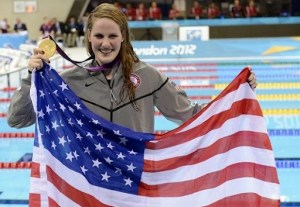
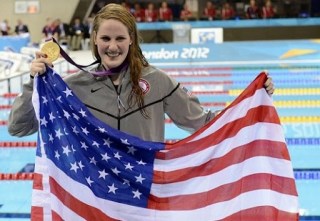
 U.S. swimmer Missy Franklin won the most golds of any woman in these Games — four — and added one bronze. This 17 year old, almost Senior in high school has decided not to turn pro and to forgo endorsement deals potentially worth millions to continue swimming for her high school and at the collegiate level.

“For right now, I still believe that college is what’s going to make me the happiest girl,” Franklin said at a U.S. Olympic Committee news conference.

Forty years after the passage of Title IX, a federal law that prohibits discrimination on the basis of gender, there is plenty of reason to celebrate. For the first time this year, women outnumbered men on the U.S. Olympic team. 

 “Does it give me an extra smile?” said Brenda Villa whose water polo team won the gold. “It does.”

Ms. Villa, 32 years old, grew up in Commerce, Calif. Villa participated in city sponsored programs where children didn’t have to pay to play sports..

That opportunity made all the difference to the three-time Olympic water polo medalist who has won three Olympic medals (two silver and a bronze) and has just completed her fourth Olympic Games, with a gold medal. 
As a co-founder of Project 20-20, she has paid it forward. This program provides swimming and water polo lessons to low-income people of the Bay area, where she served as a tutor during her days at Stanford University.
Middleweight boxer, Claressa Shields and Fly weight, Marlen Esparza won the gold and bronze medals. 
Seventeen year old Claressa  became the first woman and the only American boxer to win a gold medal. In a USA news interview she credits her grandmother:

My Grammy always said that girls can do the same thing as men. She said that I couldn’t do just everything, but she said up in sports, I should be looked at as just equal, so I should always do my best.” 

Marlen graduated high school as class president with a 4.6 GPA. She was accepted at Rice University and the University of Texas but put college plans on hold while she pursued boxing. She plans to call it quits on that career after the Olympics and attend medical school.
Although closing ceremonies have just completed, I may not have to wait long to see these women again. I’m sure they’ll be on every major morning show throughout the week, hopefully inspiring another generation of women athletes. 
Congratulations to all of the women who achieved greatness by their tireless training, their team spirit, and belief in themselves. They are Gold Medal Chingonas
Education, Parenting, Preparing for back to school, Responsible Parenting, School Nutrition

5 Ways to Prepare Your Child for School

It’s time to get everyone in your household prepared for the transition to their school routines. Yes, it’s that time again…and yes you can admit  that you are looking forward to the kids returning to school. 

Summer can be as busy as the school year. Often it’s too short for kids and too long for parents. It is a brief stop between the end of school, day camp, vacation, and studying the newspaper ads for back to school supplies. 

Parents can prepare their child for the new school year by concentrating on areas, such as independence, communication, and social skills that children need to do well in school. 

Reams of research has shown that regardless of parents’ income and educational background, their involvement in education helps their kids do better in and out of school. 

Equipping your child to have a successful school experience requires some ‘front line’ work on the part of the parent and child. These tips from educators, parents, and kids themselves may prove worthwhile in your planning. 

1. Time Management: Start at least two weeks before school begins and discuss these with your child so she/he knows the expectation:

  •  Reset the routine. Dial back bedtime by 30-minute increments until she has 9 hours sleep before wake up time. If your child is tired and moody from lack of sleep, how do you think she’ll be in the classroom?
  • Ditch the television, video games, and computer. Unrestricted access is the worst time waster. Give options and ask for input from your child. Will you eliminate T.V and electronics on Monday through Thursday or allow 30 minutes of time after homework? Imagine what your child can learn during this time from reading, writing, playing or helping around the house.

2. Communicate: Ask your child about her feelings — both the excitement and the concerns — about starting the new school year. 

  • Ask and listen. Let her know that most kids are nervous about the first day of school. Reassure her that if any problems arise, you will be there with a listening ear. 
  • Discuss Responsibility. Kids need to recognize that their actions have consequences, and must learn to accept responsibility for their actions. School is their job and they can take the lead in getting themselves ready, be on time, have their homework and books, and give you school information in advance. 
  • Put it in writing. Post the rules and a large calendar on the fridge or on a bedroom/bathroom door.
  • Don’t threaten children with “The police is going to get you if you don’t go to school.” (Or with El Cu-Cuy, a legendary hideous ghost-man, a threat from Mexican parents who lived in my old neighborhood). This teaches fear and removes the responsibility from the child and parent.
3. Familiarize

  • Visit the school with your child to see her new classroom and meet her new teacher before school officially starts. 
  • For Middle and High School: Attend orientation. Give kids the chance to see their new home away from home. Getting a feel for the school, locating their locker and learning to get it open on the first try, and finding the classrooms and lunch area can help calm anxiety.
4. Plan for their Increased Independence: We have all seen the helicopter parents who hover over their kids or argue with a teacher that their special, gifted, talented child could not have done a negative behavior. 

  • Remember there are two sides to a story. Listen to both.
  • Discuss safety issues, expectations, and responsibilities that come with the new school year. These can be different discussions according to the age of the child. Let them know when or how often you expect them to call or text you.
  • Review the importance of making smart choices, and possible consequences of not so smart choices. And, be sure they always know how to contact you, and that you will always be there for them, no matter what grade they attend.
  • Use school resources. In cases of bullying, depression, fighting, or drug use talk with school counselors to find out about appropriate resources. Most school districts have an  Office of Student and Family Services or similar department. 
5. Nutrition: Breakfast of protein, complex carbohydrates, and fruit (egg, wheat toast, orange) is much better for the brain and body than high sugar cereals or Hot Cheetos.  
All photos: freedigitalphotos.net
  • ·    Many schools  have switched to fresh food such as salad bars and offer less processed foods for lunch. If your school has not, this is a good PTA subject.
  •       Low sugar fruit bars, granola bars, crackers, peanut butter, cheese, celery, raw carrots, jicama, nuts, and fruit all make for quick small snacks that don’t need refrigeration. The brain doesn’t function well in school with cookies and a Coke for lunch.
  •       Make it a goal to eat dinner together at least three times a week.  Plan a healthy menu together. Talk about school projects, activities, class subjects and show your interest by listening.
·     If your actions show that you value education, your child is likely to respond. When students feel supported at home and school, they develop positive attitudes about school, have more self-confidence, and place a higher priority on academic achievement. 

How do you prepare your child for the new school year?