Chingonas, Strong Women, Wisdom, Writing

Five Steps to Finding the Right Publisher

AROHO Foundation
http://aroho.org/home.php

My cell phone screen saver has the dramatic backdrop of the mountains and mesas surrounding Ghost Ranch, just to cheer me up. I still have the AROHO retreat on the mind and the spirit of the women I met in my heart.

These women are “chingonas” “strong women,” in my book. They’re not strong because they were born that way, or Superwomen, but rather they became strong through failure, weakness, trials, and experiences that would defeat many. They learned from these challenges, gathered knowledge along the way, and shared that wisdom with others. That’s what makes them “chingonas.”

What I learned through these women helps me touch my AROHO experience and I hope assists you in some small way.

Each day we chose to attend 15 minute “Mind Stretches.” These were discussions on topics exploring craft, creative process, issues personal to women and publishing. Several of my past posts had to do with the craft of writing, such as Writing on the Edge but today’s post is about publishing.

“You think finding the right partner is a problem? Try finding the right publisher.” Kate Gale

This quote gives you a little insight into the witty personality and honesty of Kate Gale, PhD.  She is Managing Editor of Red Hen Press, Editor of the Los Angeles Review , Past President of PEN and President of the American Composers Forum, LA. She serves on the boards of A Room of Her Own Foundation and Poetry Society of America. She is author of five books of poetry and six librettos including Rio de Sangre, with composer Don Davis.

Kate Gale-Writer, Poet, Publisher

Kate’s bio shows us that the woman knows what she’s talking about when it involves writers, poets, and publishing. Her insights into the world of writers is priceless:

“…the most difficult part in getting one’s work out into the world is that you are a cave dweller if you are a writer. You have to come out of your cave, understand the world of editing, publishing, publicity, social media, and you have to talk to people. And you don’t know how. So you go back into the cave angry. And emerge later. Telling people how you aren’t appreciated. That doesn’t make them love you more. You start to seem misanthropic. Writers can be fun. Funny and fun. There is a lot you can learn from writers. About patience mostly.”

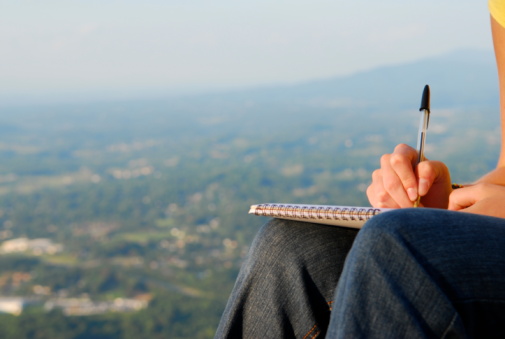
Now go grab a pen and notebook, it’s time for some interactive work to help you find the right publisher.

Answers these five questions:

  1. Who are you? Come on you can list more than three items. What are you passionate about? Keep writing until you get to the heart of you.
  2. What does  your story (novel, memoir, poem) want to say? What is your message? Keep writing until you find some universal themes.
  3. Who are the writers in your tribe (genre of writing)?
  • List 5-10 writers you love to read in your genre of writing (most of them have to had published in the last five years). Let’s say the writers/books you write about and love are in the historical fiction genre. Now:
  • What regional, national associations in this genre do you belong to?
  • Have you attended conferences, workshops, seminars in this genre?
  • Do you attend readings in this genre?

4.  Once you find your tribe (in #3), you need to find out how to open and get inside that door. The people you meet should be part of the tribe.

5.  Form connections with authors, editors, agents, publishers you meet in these settings.

  • Meet them one on one. Step out of your comfort zone.
  • Let them know how much their reading, presentation, or book meant to you.
  • Once inside the door, make yourself useful. Volunteer, hold an office, contribute in some way. Be a literary citizen.

Did you fill up at least one side of your paper? If you did, you’re on your way to finding the right publisher for your work. It’s a difficult road to walk as a writer, but with guidance it may be a whole lot easier. Happy travels and happier writing.
AROHO, poetry, Writing, writing retreats

Writing on the Edge

writing in diary

Five days after returning from the AROHO writers retreat at Ghost Ranch in Abiquiu, New Mexico I still have many memories swirling through my mind . One such memory is particularly embedded in my skin. I have 12 itchy scabs from 12 mosquito bites despite the mosquito repellant and itch cream.

On the second day of my arrival I began my small group, Writing on the Edge, taught by Jillian Lauren. She is the author of Some Girls: My Life in a Harem and Pretty Girls . Jillian proved to be an excellent guide and inspiration.

The blurb for her course caught my eye and interest:

Drugs, sex, violence…are you bored yet? Why is some of the juiciest material so hard to translate onto the page in a dynamic and engaging way?

I don’t know if Jillian chose the location for her class, but it was near the edge of a small mesa. I had to hike up a dusty switchback to get to class under 90 degree weather.

Road to Class: Writing on the Edge

First day in group, the seven of us were asked if we knew yoga. All of them, sans moi, knew the poses. I lumbered onto the map, stretching and opening my ‘creativity’ as Jillian instructed. Plank, Downward Dog, and Pigeon stretched me beyond where I had gone before. I do have to say that the stretches, deep breaths and silence did make me feel better.

Conflict and tension is necessary in most stories, especially to keep the reader interested. But how do we do that? Jillian explained that the act itself may not be dramatic, but to

…look at the journey, the motivation, the fear of the character

The result of those thoughts is what has to be created and put down on paper. A way to do this is with a free write:

Warm Up: After you have stretched and opened up your creativity, pull out a pad of paper before your “real” writing begins. Think about what you’d like your next “edgy” scene to convey. You can use a timer to write for 10 minutes. Write without your pen lifting from the page, no cross outs, no self editing. You may find the words flowing right away on the page.

Jillian had us sit with our journals and gave us a writing prompt. We had to write for five minutes, again keeping the pen on the paper.

The prompt: How are you feeling right at this moment? Here is my response.

A very intelligent mosquito found its way to a patch of unsprayed flesh beneath my bra strap. He bit into my warm skin and drank like a thirsty elephant, leaving me with a swollen itchy blob of mounded skin. It is a testament to his prowess. Cortaid is too weak for the wound.

 Scratching has released oozing fluid beneath the tender hill of skin. His creativity is to be applauded. He bit a spot that is difficult to reach. The itch will soon go away, leaving a brown scab on a red sensitive bump, a reminder of my time at the AROHO retreat. 

Some memories are made from stuff like this, the sudden bite, the quick stab, the stealthy adventure in the dark. A surprise visit from someone or something you tried to avoid, someone you tried to keep safe from. The best laid plans sometimes need to be disrupted reminding us we can’t stay insulated from pain or danger.

Two days later we talked about our “shadow self. ” In Jungian psychology, the shadow or “shadow aspect” is a part of the unconscious mind consisting of repressed weaknesses, shortcomings, and instincts. This was the ‘edgy’ writing we came to learn.

We had a ten minute exercise to write to our shadow, then we burned the paper, mixed it with sand, straw, and water. Some of the shadows were lumpy blobs of clay, others smaller, holey, glittery, big and small. We released the dried clay into the Abiquiu Lake a couple of days later, bidding them goodbye.

The next day we were given another prompt. We could choose one of these: Fear means… Shame means…Risk means… I chose to write about shame.

Shame means…

Shame means inward responses to outward looks. Whispering or shouting responses that no one hears.

Shame turns inside, tight and tiny, steals whatever is near to cover up, look like something else. Only you see the shadows lurk, grow huge, come nearer.

Shame hunches shoulders, shuffles feet, has you fascinated with your hair or a piece of candy. 

Shame has you move into corners, watch the world go by, carry a purse full of secrets, and lies. A wardrobe of masks and decorations.

Shame has you sweat inside when you see those particular set of eyes, a facial gesture, a mannerism. 

Shame makes others use tools, hammers and chisels, to get to the real you. Tools very few people seem to carry or want to use.

Shame makes you fight, first with yourself, then with others.

If you’re lucky you fight the real reasons for that shame. You use the chisel to cut off the crap, move deeper, make something uniquely beautiful from a slab of stone. *

The yoga exercises, discussion on the “shadow self,” and prompts were valuable. You never know what you will find when you delve in deep. Thanks Jillian.

*The narratives are copyrighted and the property of Mona AlvaradoFrazier. Thank you for sharing and linking back.