Blog

Writing

How an Instagram Challenge Improved My Writing Life

The battle proved long but victorious.

She Writes Press came up with a challenge for writers at the end of April and I thought, ‘why not.’ This seemed to be an easy way to post on social media and see what other people experienced in their writing life.

Scanning my feed on Instagram is quick because I don’t follow a bunch of people, after weeding out those men who post 101 selfie pics. Some guys use Instagram and FaceBook like online dating sites. Not interested.

But back to the topic and the 31-Day Challenge:
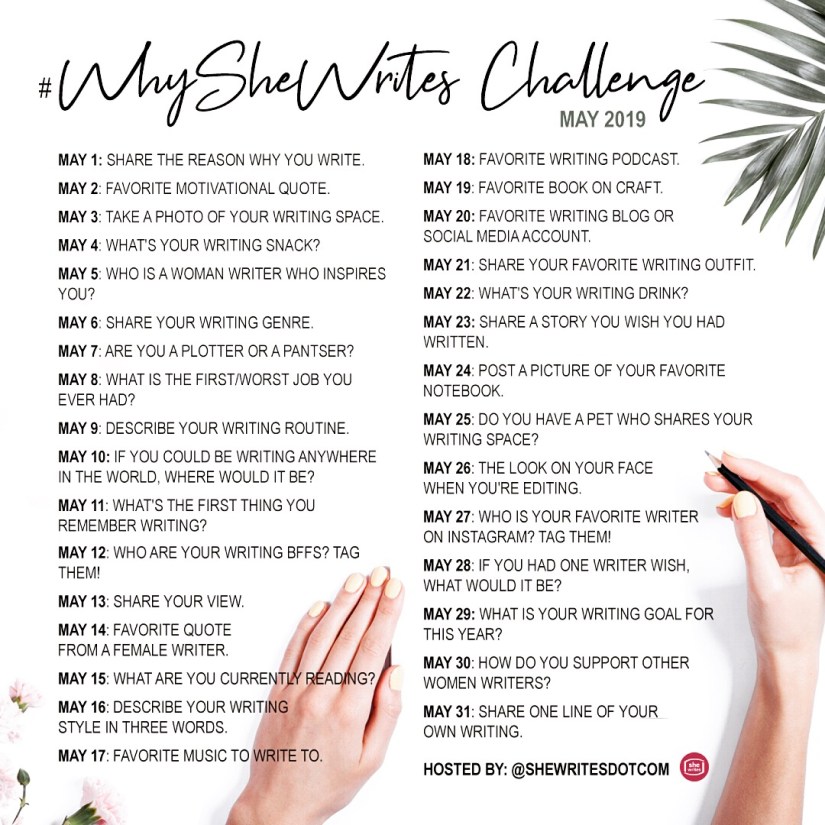
WhySheWrites Challenge

The questions lent themselves to introspection, figuring out how to show an answer, and exposing some of the more challenging parts of the writing life.

Here are a few of my Instagram responses.

Share the reason you write:

Growing up, I didn’t read any books with Latina characters who reflected my experiences until I was in college. Those books were few and far between, written mostly by men.

So when I began recording my words (about ten years ago), I found myself writing about loss, abandonment, and other challenges encountered by women and girls to amplify their strength and resilience. In doing so, I increased my own.


Why I write? alvaradofrazier.com

Share a photo of your writing space:

My grand-kitty Heidi Ho lets me know when she thinks I’m staying too long at my laptop. She has a routine: jump on my chair, leap to my desk, and if I’m still typing she wedges herself behind my computer where she glares and meows until I shut it and pay attention to her; which means taking her outside in the garden to stalk lizards.

She helps me balance my writing day.
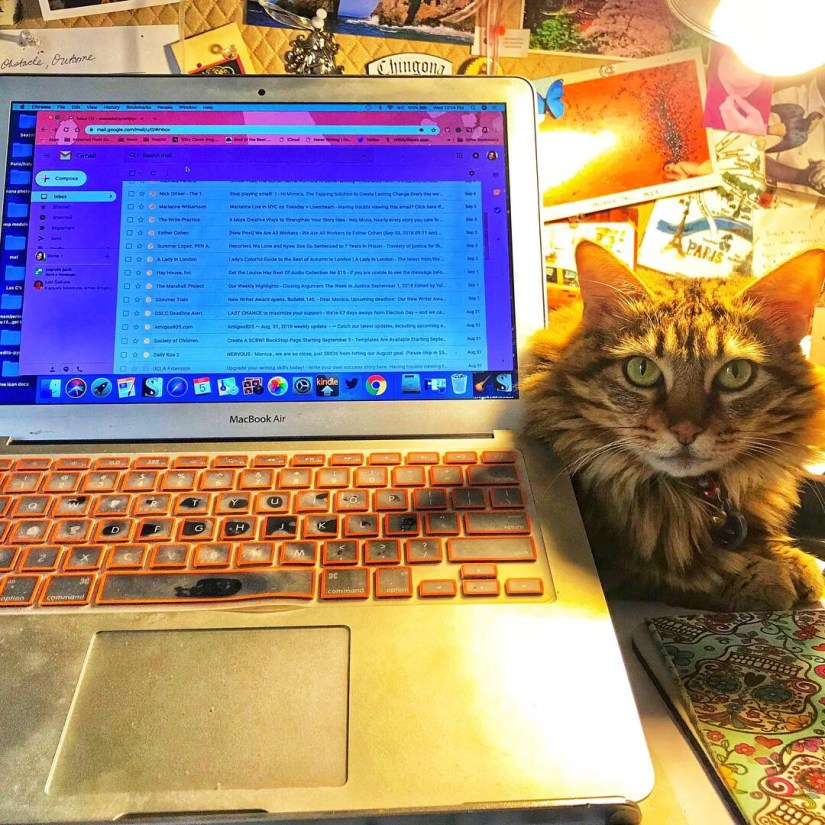
 

Share your writing space.


What is the first/worse job you’ve ever had:

My first job and my worse job involve strawberries. I grew up in and live in the strawberry capital of the nation. Mom made us work in the strawberry fields, para que sepas (so you’ll know). We had accompanied her on weekends to pick walnuts before but picking strawberries at age 11 or 12 was harder. Walnut trees had shade. The strawberry fields went on forever, the heat blasting your back, the hot dirt. I lasted two days.

My worse job was working in the strawberry packing house on the graveyard shift the summer before college. I was not well treated by older women. As far as they were concerned, I took a job away from a mother, but that was the only decent paying two-month job I could find at seventeen.

I sorted strawberries on a conveyor belt while standing for eight hours. The cold water running through the belt splashed with each rotten or damaged strawberry I flicked into the dirty reservoir. The best fruit went to Japan, and the rest were sorted by better, good, average, and jam.

Overhead fluorescent lights beamed down, making the warehouse seem otherworldly at three in the morning. Strawberry and dirt odors lingered on my body the entire day and in my sleep.
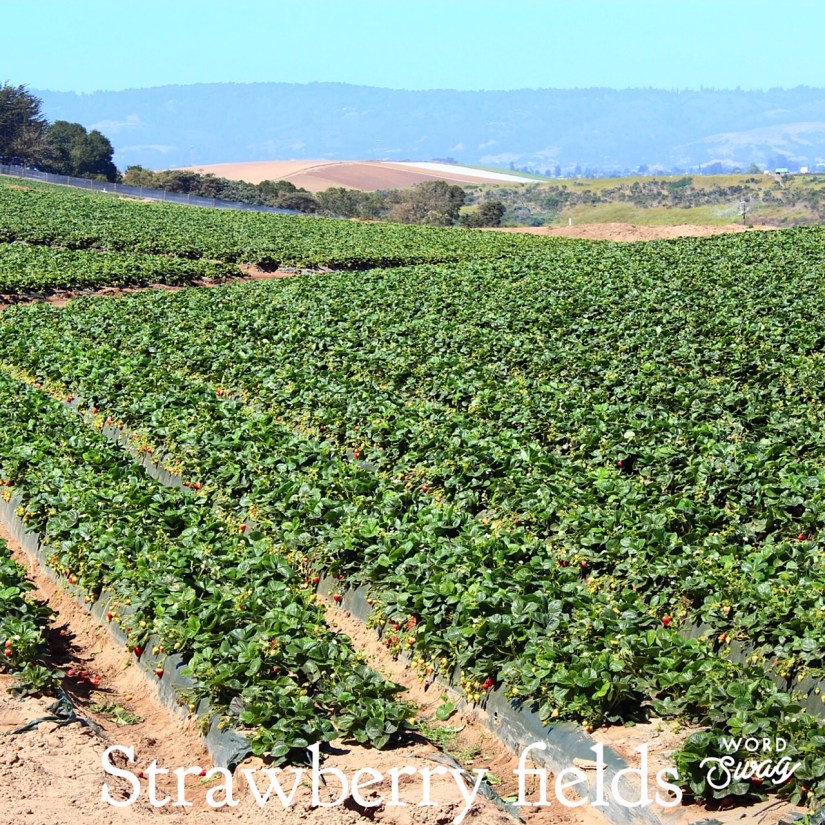
What is your first and your worse job?


Women writers who inspire you:

There are so many, so I listed the ones who authored the books I buy/borrow. Usually, I have three or more books written by the same author.


Share one line from your own writing:

She was sober enough to remember that liquor and men were a bad combination, but drunk enough to think she could drive.

I’m glad I took the challenge, and in the process, I found out more about my own writing life and what informs my writing.

Finding several like-minded people, who run the spectrum of age, life experience, and writing backgrounds, was a plus and illustrated how the ‘social’ in social media work.

Over on the right hand column I list my Instagram and Twitter account links if you’d like to visit my sites or follow me so I can follow you.

Thanks for reading.

Cesar Chavez Day, Social Justice

Why César Chávez Day Needs to be Remembered

César Chávez on the cover of Time Magazine 1969
César Chávez on the cover of Time Magazine in 1969

César Chávez was an Arizonian, WWII Veteran, father, husband, organizer, and leader. His legacy as a leader among farm workers’ unions is honored on March 31st.

The Spanish phrase: “Si Se Puede” (Yes, You Can), coined by Dolores Huerta, became the rallying cry for César Chávez during a 1972 fast in which the Mexican American farmworker rights advocate protested a signed Arizona bill that denied farmworkers the right to strike and boycott during harvest seasons.

In 2012 former Secretary of Labor Hilda L. Solis hosted the Induction of the Pioneers of the Farm Worker Movement into the Labor Hall of Honor and the naming of the César E. Chávez Memorial Auditorium in Washington, D.C.

Thanks to César Chávez and the UFW the actions led to these accomplishments:

  • The abolishment of the short-handled hoe that crippled generations of farmworkers.
  • Unemployment, disability, and workers’ compensation benefits for farmworkers;
  •  Establishment of labor contracts with employers that require rest periods,
  •  Toilets in the fields.
  •  Clean drinking water, handwashing facilities,
  •  Protective clothing against pesticide exposure.
  •  Banning pesticide spraying while workers are in the fields.
  •  Outlawing DDT and other dangerous pesticides.
  •  Eliminating farm labor contractors and guaranteeing farmworkers seniority rights and job security.
  •  Creation of a pension plan for retired farm workers; a credit union.
  •  and comprehensive union health benefits for farmworkers and their families.
cc image

On this day, the UFW martyrs also need to be remembered. These were men and women from Yemen, Mexico, and the United States. They were Jewish, Muslim, Catholic and Protestant.

Not many people know of the men and women who participated in and fought for the establishment of the UFW. They were inducted into the Labor Hall of Fame:

Nan Freeman: an 18-year old college freshman from Wakefield, Massachusetts, who gave her life while picketing with striking farmworkers in central Florida in the middle of the night because of her love for justice. In Cesar’s words, Nan was Kadosha in the Hebrew tradition, a “holy person” to be forever honored.

Rufino Contreras: a 27-year-old husband, father of two, and a dedicated union activist who was shot to death in the Imperial Valley lettuce field for demanding a more just share of what he produced during the 1979 vegetable industry strike

Nagi Daifallah: a young Muslim immigrant from South Yemen who was killed during the 1973 grape strike after giving himself completely to the union to escape the trap of powerlessness. Nagi immigrated to this country to escape poverty, only rediscover it in California’s rich fields and vineyards. He learned English, could communicate well, served as a translator for UFW organizers, and became active with the union.

Juan De La Cruz: a 60-year old immigrant from Mexico, a gentleman who knew firsthand the benefits of a UFW contract. He was also a grape striker and an original union member recruited by Cesar in the early ’60s. Juan died two days after Nagi’s killing when shots rang out on a vineyard picket line, and Juan shielded his wife, Maximina, with his body.

Rene Lopez was only 21 when he came home and proudly told his mother, “Here is my first union card. Now I am important. Now I am a man.” A short time later, grower goons gunned Rene down just after he voted in a union election at Sikkema Dairy near Fresno, which he and his co-workers were striking. Rene was young, but, as Cesar observed, “he had already felt the call to social justice.”

César Chávez has a special connection to my county, Ventura, because he lived in Oxnard as a child and returned as an adult to organize protests and boycotts to secure better wages and working conditions for farmworkers.

My mom marched until the age of 89 yrs.

Chavez march oxnard
Mom at C.C March, Oxnard 2016

Here are some old posts: Remembering Cesar Chavez and My Mother

A March Down Memory Lane

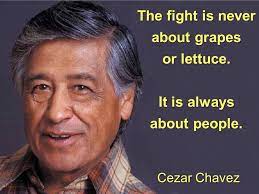
From the depth of need and despair, people can work together, can organize themselves to solve their own problems and fill their own needs with dignity and strength.-

César Chávez

I hope you commemorate the day by serving others, doing random acts of kindness, or teaching others about Chávez’s legacy.