
I woke to thoughts of France, perhaps because it’s Bastille Day. I miss long walks through Paris.
Twelve years ago I made a promise to myself that someday I’d stay in Paris for a month so I could enjoy my time instead of rushing through seven or nine days as I had twice before. Close to three years ago I spent a month in France with my friend Amada.
This might sound morbid, but this morning I pictured walking through Pere Lachaise Cemetery which was close by to the apartment we rented. Over two million people have visited this site, so I guess we weren’t so morbid after all.
This two-century-old cemetery is a remarkable place to visit. We spent several hours in this burial place where the famous, infamous, and ordinary people lay.

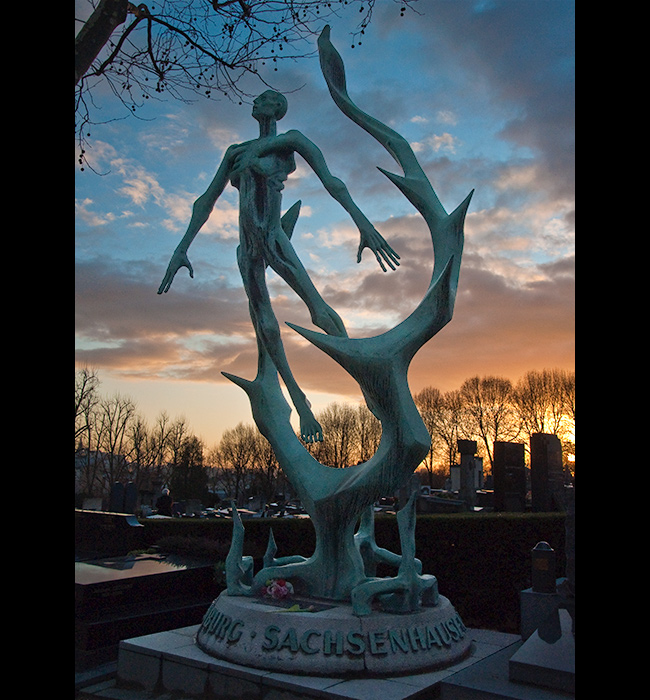
Shady chestnut trees lined the lengthy winding cobbled promenades where the dead lay buried. A scenic walk through the hilly cemetery seemed an unlikely attraction, but we wanted to visit the tombs of writers, composers, singers and holocaust victims.
There are so many twists and turns in this place that a map is necessary to find the over 100 notables buried over the 110 acres.
The works of art in this city of the dead surprised me. The magnificence of stone and granite buildings mesmerized. Marble columns, mosaic tiles, and stained glass windows decorated tiny mini-chapels over tombs.
Some of the tombs appeared new as they were so well taken care of by family, estates or fans. Other tombs were in decay, blackened with soot and overrun with ivy. Jim Morrison’s gravesite was unexpectedly plain but enlivened by souvenirs, flowers, melted candles and tons of graffiti on the adjoining cement slabs.
During the walk towards the top of Pere Lachaise, I almost forgot I was in a cemetery as there are thousands of trees, plants, and hundred’s of scultpures. A black cat darted across gravesites while ravens circled treetops.
The view from the top of the hill is well worth the climb.

I think Paris is calling. Again.

 alvaradofrazier.com