Books, Latino culture, poetry, poets, Writing

Singing At The Gates: Selected Poems

Singing At The Gates: Selected Poems

Jimmy Santiago Baca, an award-winning writer and poet (National Endowment of Poetry Award) does it again. Singing At The Gates is a collection of new and previously published poems that reflect back over four decades of Baca’s life.

This selection of poems includes his early work as a budding poet, written while he was 18 years old and serving a five-year prison sentence, poems drawn from his first chapbook and recent pieces on family, nature and the environment.

“What an achingly beautiful collection this is. So split open, so raw, honest, vulnerable, real. Spanning Baca’s life in poetry, you feel the enormity of his heart and intelligence.” —Natalie Goldberg, Writing Down the Bones and The True Secret of Writing

When I read poetry, it’s usually two or three poems at a time. I’m partial to shorter narrative poems that are rich with description and weighty with a single word. My favorite poets are mainly women but sometimes I’m drawn to a poem by a male poet such as Jimmy Santiago Baca.

Baca’s voice captured me at his introduction and I didn’t want to stop reading until I was exhausted.

“I love the growl of poetry, the staggering crash of idols and the burning of literary pacifiers…writing was for me, everyday-me snatching memories and writing them down before the fire of forgetfulness and trauma relegated them to the dark chambers of amnesia…I take only what I can carry and what is most meaningful to me-and that is the narrative, the story, the poem.”

The rawness and vulnerability that Baca writes about in the first half of the collection is so heavy, at times, that my emotional exhaustion came after five or six poems. Many of the poems are viscerally descriptive:

“I wear the moon like yanked out roots

glowing orange

in my heart’s fang as I search for secrets

in my life”

Approximately halfway in the collection we come to poems of awakening, growth, family and celebration.

“The reason I wake this morning

is because those people who’ve lived

through tragedies and loneliness and

anxiety found in their shattered-pottery

hearts fragments that fit perfectly

into the puzzle of night stars,

into the joyous cry

of a child at dawn

dashing out on the playground,

into the hands of men like me

who rise and dress and walk

out the door, culling from winter night

residues of summer

to dream a bit more

of the growing season.”

The last third of the collection is from 1998 to present. In Baca’s poem “It Makes Sense To Me Know,” he writes about his time as a volunteer teacher of reading and writing. He asks the children to write a letter poem about their journey to America and describes a shy little girl asking him to sit on the floor next to her as she stood on a small stage in a bookstore.

“When she uttered that first word/a glint of light sparked across her brown eyes into the world, as if it were/golden/speech without sound. I sat amazed/at the light in her eyes, igniting a memory/in/me–when/I too recited my first poem. The intensity/and/radiance of/a child reaffirmed my original reason for/writing, one I had forgotten along the way./Suddenly/I knew, keeping the light intact,/not teaching writing, not to mold or direct,/just to keep it burning, blowing on the /embers so hope doesn’t go out…”

I cannot name one favorite poem but I have a top ten list of Baca’s poems because there are so many touching, gripping, slap you upside the head words of poetry in this 254 page collection (for Kindle).

Singing at the Gates debuts in January 2014 but is available for pre-order through Amazon, Barnes and Noble, and other bookstores. I read the collection as a participant of NetGalley.
Latino culture, Latino family tradition, Uncategorized

The Icons of Day of the Dead

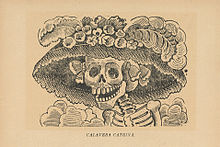
La Catrina- Jose G. Posada etching, 1910 Mexico
November first begins the Day of the Dead (Dia de los Muertos) festivities and whose roots can be traced back to indigenous cultures. The Aztecs had a celebration in the ninth month of their calendar with a celebration to their goddess Mictecacihuatl, the Queen or  “Lady of the Dead.”


Souls did not die, they rested in Mictlan. Her role is to keep watch over the bones of the dead and she presided over the ancient festivals for the departed. She and her husband, the King of Mictlan, were depicted as skeletons and lived in an underworld of bats, spiders and owls.

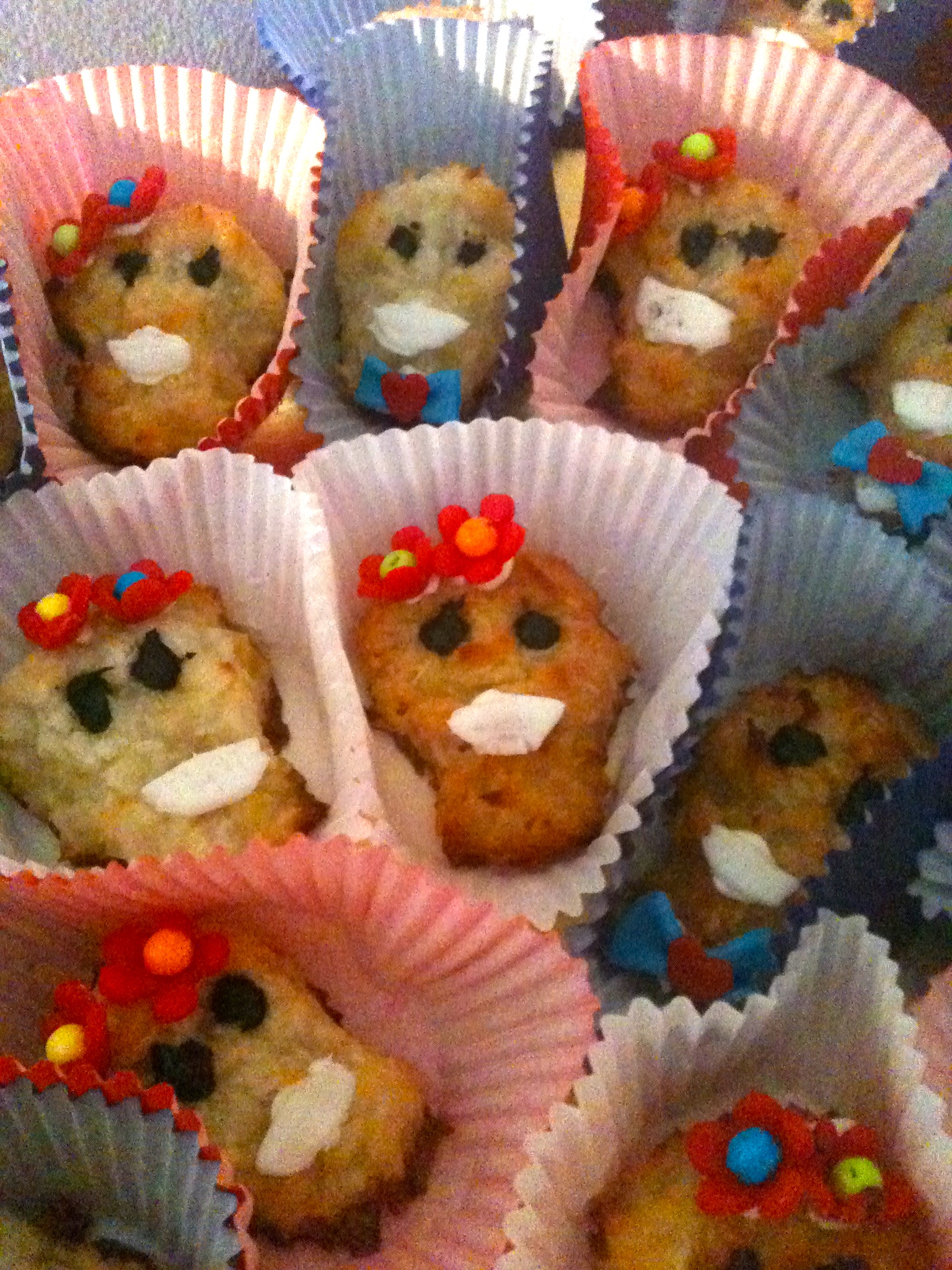
The calavera, or skeleton is an icon of the DDLM. It has now evolved to stylized and colorful versions of the skull or skeleton figures. You’ve probably seen hundreds. You can find the history of the sugar skulls here.  Many times you’ll see skull shaped breads, cookies or candy. I had these delicious cookies last year:

IMG_0322
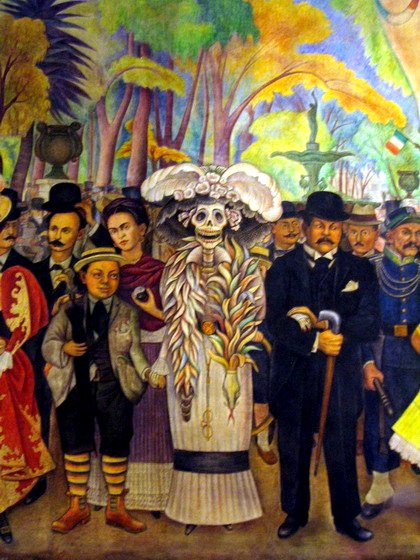
Another icon of  DDLM is La Catarina. She is originally found in a 1910 zinc etching by Jose G. Posada, Mexican printer maker and cartoonist. Later La Catrina was stylized as a female skeleton dressed in a hat befitting the upper class outfit of a European of her time. Her hat originally is related to French and European styles of the early 20th century. She is meant to portray a satirization of those Mexican natives who the artist, Jose Posada, felt were over embracing European traditions of the aristocracy in the pre-revolutionary era.
La Catarina
DIego Rivera’s  “portrait” of Catarina popularized her in this 1946 mural.
The Kid-Diego Rivera. Wiki Creative Commons Lic.
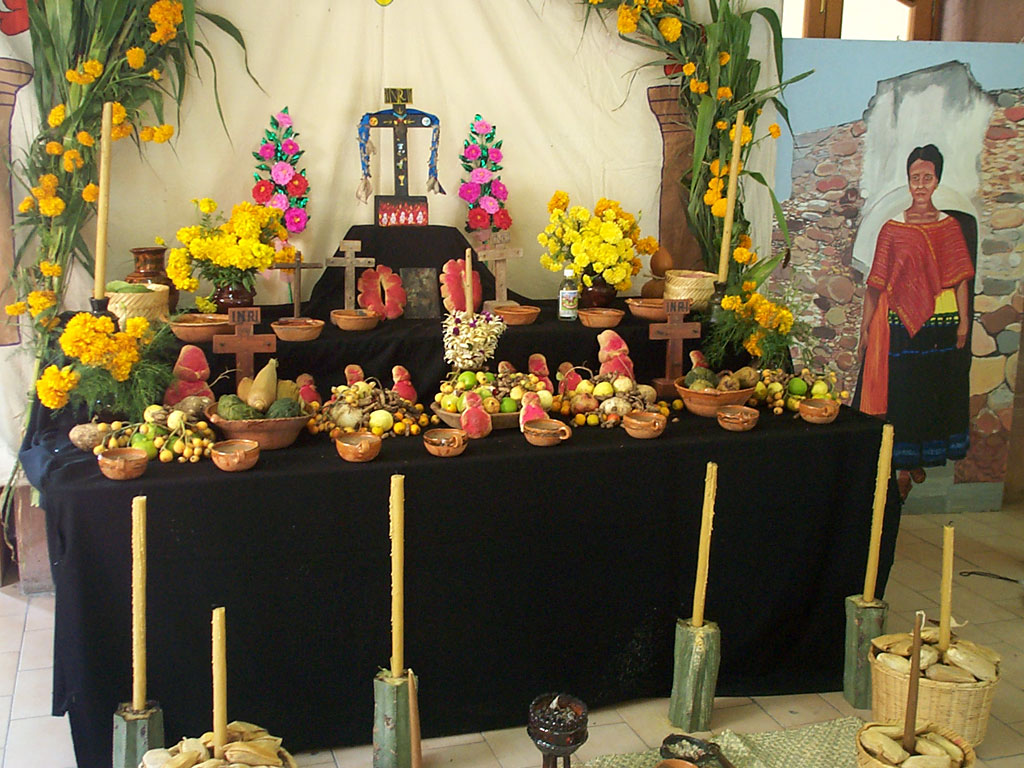
The spirits of the deceased are thought to pay a visit to their families during DoD and the families prepare an altar, another icon, for them. The altar is used to hold offerings, or ofrendasfor the departed. Their favorite foods, photos, and mementos are often placed on the altar together with items the deceased enjoyed:  toys, candy, liquor, hobbies, etc. A bar of soap, towel, bowl of water and other grooming items are traditionally left at the altar with the belief that the dead have been on a long journey and would like to refresh themselves. 
Day of the Dead Altar-Mexico, Wiki Images
An icon that celebrates the indigenous roots are the Four Elements: wind, water, earth and fire are often represented on the altar. Wind is sometimes signified by papel picado that moves in the breeze. Candles depict fire, food represents earth, and liquids represent water. The cempasuchitl (Mexican Marigold) is an Aztec tradition, and another icon, which says that the twenty-petal flower attracts souls to the altars.
In the last ten years, Day of the Dead celebrations include both traditional and political elements, such as altars to honor the victims of the Iraq War. There are updated, inter-cultural versions of the Day of the Dead such as the event at the Hollywood Forever Cemetery, (a very cool website). This year the Smithsonian Institute has a celebration-on 3D! 
Smithsonian Institute
Smithsonian Institute Dia De Los Muertos
The DDLM’s has become more widely known and accepted. Although I didn’t grow up with DDLM’s, I did grow up with small altars in our home, where we did have statues and prayed for the departed throughout the year. This was more in the tradition of Catholicism.

This year, like the last three years, I’m attending a DDLM party at the Ventura County Museum, which features crafts, altars, drinks and dancing. Whichever way you honor your loved ones and those who have departed, may you have a memorable Dia de los Muertos.