AutoCrit, C.S. Lakin, Critique groups, finding professional editor, Grammarly, Holly Lisle, One Pass Manuscript, Revision, self editing, Writing

Five Tools to Use After Writing "The End"

gettyimages

After 12 drafts of my first manuscript I believe I now have a few ideas on what to do after writing “The End,” on a first draft. No matter how capable you are as a writer and proofreader, your first draft is just that-a draft

Writers use several different ways to revise their writing: critique groups, beta readers, or scrutinizing each chapter with a lice comb. You can do that, ad nauseum, but I found that delving into your manuscript using a method such as Holly Lisle’s One Pass Manuscript revision process was the most helpful. 

Yes it can be a difficult task, but isn’t what you want to say worth it? If it’s not, then perhaps you should rethink why you’re writing the novel, short story or memoir that you initially thought was a good idea. 

Unfortunately, I did not realize the wisdom of using a revision process until after several months of long and laborious critique group sessions. Don’t get me wrong, the right critique group can be invaluable and I belong to an awesome group, but why waste their time, and yours, ‘critiquing’ a piece that isn’t ready. 

Now that your first revision is done, it’s time to make like a gold miner and  sift through the muck, dark water, and rocks. Run your sediment and dirt clods through the sluice by using these (or similar) writing tools:


1. Spell check- I use Grammarly to make any grammar corrections and list the use of passive phrases. This tool goes beyond the MS word auto check function. And it’s free.

2. Editing– How many times did you use words that weaken your writing by using “and,” “that,” adverbs “-ly‘s” or repeated a word six times on one page? (five too many). 

AutoCrit identifies these types of problems and can identify sentence variations, cliches and readability. Copy and paste 1,000 words of your revised draft through this software tool and you’ll be amazed at what comes up. 
gettyimages
Now that you’ve rinsed your nugget of gold through the water it’s time to fix your revision. Do this before you meet with your critique or writing group.
3. Critique Group-Take your first 5 pages or whatever is the limit for your group and ask your fellow writers for some specific information about your writing:
  • Have I introduced the main character in the first few lines?
  • Did I introduce some sort of a conflict, either internal or external? 
  • Have I begun the story in the middle of something that’s happened or about to happen? 
  • Have I given the reader a sense of the setting? year, locale
  • Is there a hint at the character’s need, desire, goal, fear, dream?
  • Is the dialogue (if any) concise, at cross purposes, and give a sense of the characters personality? 
  • Do you consider my first line a “hook?” Does it give an image that grabs the reader, makes them go to the next line, the next paragraph, the next page? 
4. Self-critique: That rock is beginning to look more recognizable. Yes, it may be gold. Use this checklist I found at C.S. Lakin’s “Critique My Manuscript. Read it, use it, revise your manuscript. You’re shining up your nugget.

5. Professional Editing: Your piece of gold may be at a dull shine, but you want to polish up this baby, fashion it into best it can be, see the true luster of your work, then hire an expert.
gettyimages
Yes, this tool is the most expensive in your toolbox. The decision to find and pay for a professional editor to review your work is highly personal. It can be scary. You have to decide if you will pay for another set of eyes to constructively criticize your manuscript. But wouldn’t you take your gold nugget to a reputable jeweler, have it appraised, help make it into something beautiful? 
If you answered “yes” to the question above, come back next week when I’ll take you through my experience in looking for a professional editor. 

Until then, put your butt in the chair and keep writing.


Authors, Colin Falconer, Editing, Famous author funny quotes, Revision, Writing

Weirdly Wise Words from Writers

Writing can be time consuming, frustrating and I’ll say it, a little tedious. It shouldn’t be, especially if it’s your passion, but stuff happens (especially when it comes to revisions). So when I’m at my wits end I take a break, find a book and the nearest quiet area. Sometimes I take a walk or watch a re-run of the Big Bang Theory.


 numuko.tumblr.com

It’s a break with a purpose: either to enrich me, relax me, or make me laugh. Today I went in search of all three. I found some wise, funny or weird words from writers, famous, infamous or otherwise. 

Hunter S. Thompson:                     
With novels such as “The Rum Diaries,” “Hells Angels,” and “Fear and Loathing in Las Vegas,” I’d say his advice worked. Some more of his words to write to…“Buy the ticket, take the ride.”

Elmore Leonard:

“Keep your exclamation points ­under control. You are allowed no more than two or three per 100,000 words of prose”  !!! (Exclamation points are mine)

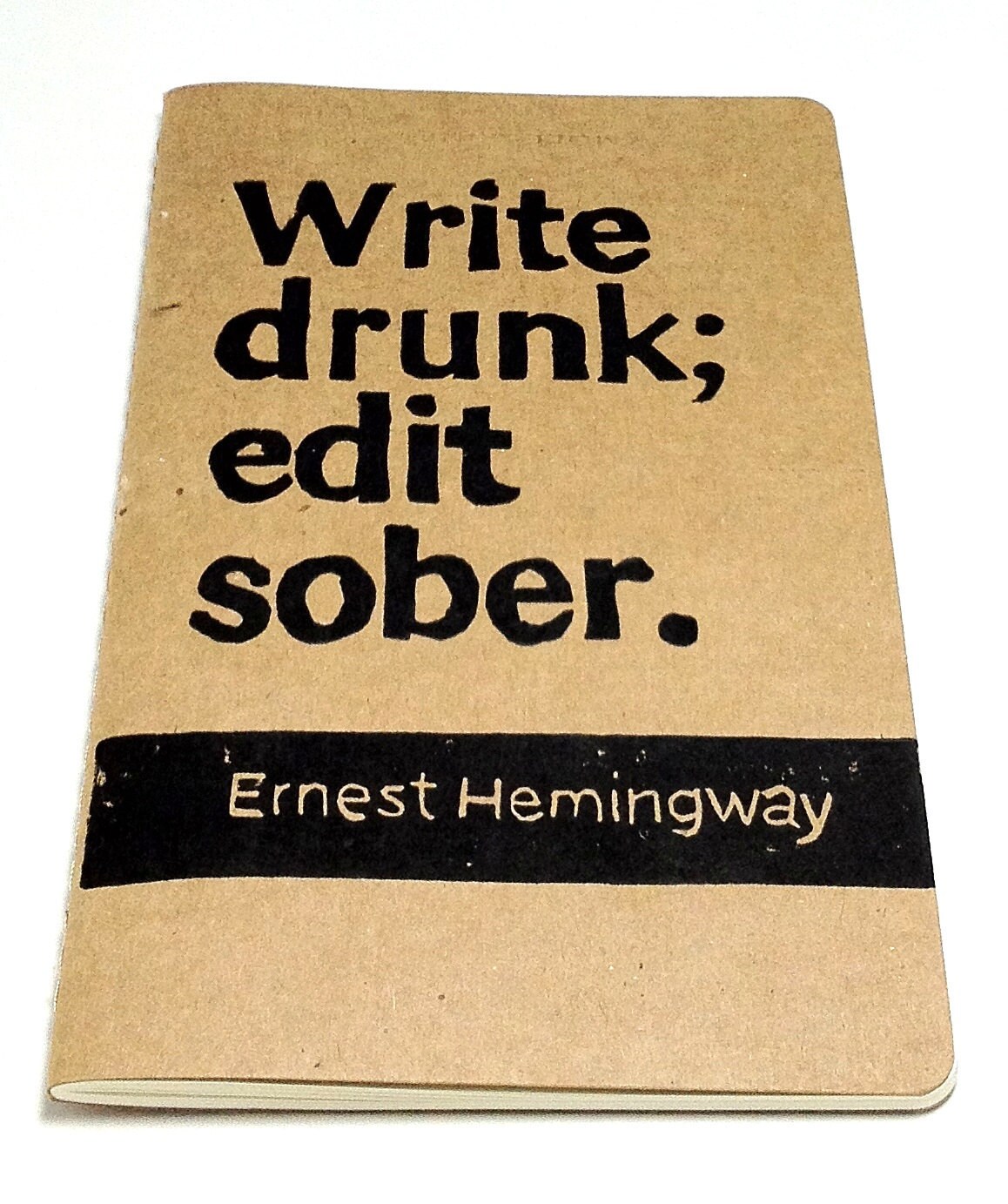
Ernest Hemingway:
etsy.com
English Professor (Name Unknown), Ohio University:

“I am returning this otherwise good typing paper to you because someone has printed gibberish all over it and put your name at the top.” (Wasn’t  I or is it me?)

William Safire:

“Avoid trendy locutions that sound flaky.” He also said, “A writer must not shift your point of view” and “Take the bull by the hand and avoid mixing metaphors.” He’s also a Pulitzer Prize recipient, so take heed.

possibilitygirl


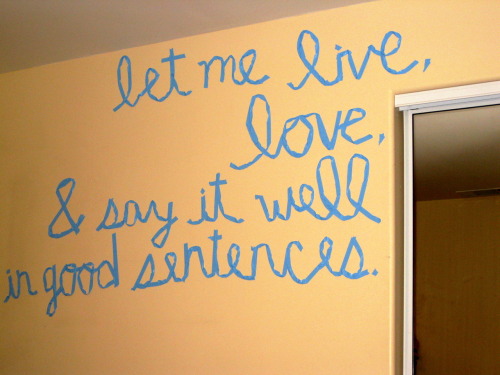
Sylvia Plath : this quote isn’t weird but the giant Post-It qualifies.


For some more wacky wise words click over to Colin Falconer’s blog “Looking for Mr. Goodstory,” His post inspired me to find more quotes.
And now, back to my revisions. 

You write to communicate to the hearts and minds of others what’s burning inside you. And we edit to let the fire show through the smoke. ~  Arthur Plotnik, The Elements of Editing