
Today was one of those days when I just didn’t want to write. It was chilly outside my warm blankets and overcast.
My main character, Juana, had just received a letter from her mother-in-law, Mrs. Ivanov, that advised her that she was suing for custody of her infant daughter.
What can Juana do, besides cry, when she has 30 months of prison time left to do. I felt sorry for her but not sad enough to get out of bed and start writing. An hour later, I woke up, stubbed my toe, the same one I stubbed last week, and fell back
into bed, where I stayed for another 30 minutes. Serves me right.
Instead of devoting time to my protagonist, I had my coffee and oatmeal, read the paper, glanced at the time, and realized I was late for my appointment at the car repair shop. Three hours later and an unexpected $545 additional cost, which I declined, I returned home pissed off. Life took over, and I pushed Juana aside again.
All of this started the churning in my mind of whether it mattered if I wrote or not. I mulled that over for a while until I picked up my Writer’s Digest and came across an article, “Ten ways to fuel your writing,” by Bill O’Hanlon, a motivating article (I’m writing, aren’t I). Out of the 10 ways, four struck a chord:
WRITE FROM BEING WOUNDED.
What struggles have you had in your life? What can you offer to others who share them? Patsy Rodenburg had speech problems as a child that led to a wounding encounter with an “elocution” teacher, whose cruel treatment, combined with mocking taunts from fellow students, silenced Rodenburg in the most literal sense possible.
And she’s not the only one. Blind, deaf, and mute writer Helen Keller—who authored several bestsellers in her time—wrote, “I thank God for my handicaps, for through them I have found myself, my work, and my God.”
WRITE FROM FRUSTRATION THAT A STORY HAS GONE UNTOLD.
Mark Arsenault was a newspaper reporter assigned to cover the story of a dead man found under a bridge. When he stumbled on a group of homeless heroin addicts near the scene, one of them, Julia, made such an impression that he wanted to write about her. Julia became the inspiration for his debut novel, Spiked. Arsenault’s essay “Romeo and Juliet With Needle Marks,” anthologized in How I Got Published: Famous Authors Tell You in Their Own Words, explains: “I was so ticked off, I had to write fiction.”
We all know of stories the world should hear. You could be the one who finds a way to tell them.
WRITE TO HELP ILLUMINATE OR CORRECT A SOCIAL INJUSTICE.
Never forget that your gift as a writer gives you the power to make a difference.
Before he wrote the popular Burke crime novels, Andrew Vachss was a federal attorney investigating sexually transmitted diseases that had been given to children through abuse, often by family members. He began to write to get a more extensive jury than he could find in a courthouse. He wanted the laws to better protect children, so he started writing fiction on these themes.
In an interview on Amazon.com about his latest novel, Another Life, Vachss says, “My goal was not to raise consciousness but to raise anger. Ours is a country where anything can be accomplished if enough people get angry … because, in America, we act on our collective anger.”
WRITE YOURSELF OUT OF (OR THROUGH) A CRISIS.
Before he was a writer, the late Dominick Dunne was a Hollywood producer but an unhappy one. He turned to drink and drug use and eventually got him fired—so he left California, moved to a cottage in Oregon, and began working on a novel about Hollywood (The Winners).
Later, his daughter was murdered. During the trial, Dunne was appalled that the murderer seemed to have been coached on what to wear and how to act (even carrying a Bible). Dunne knew enough from his time in the movies to recognize acting and props when he saw them. He became outraged when he saw how easily the judicial process could be manipulated and distorted. “Thank God I hit bottom,” he once said. “Hitting bottom is wonderful if you can get back up.”
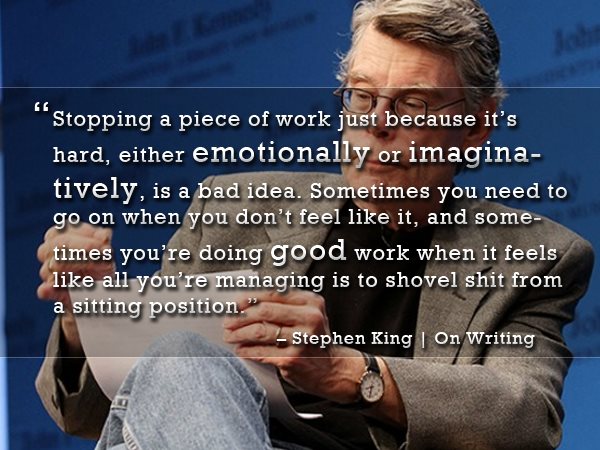
When I finished the article, I thought about my stories. My characters are wounded, in, or going through a crisis; they deal with social issues and are people we don’t generally see in mainstream novels. All four of these fueled my reasons for writing what I write. I felt better after reading Mr. O’Hanlon’s article and turning my attention back to writing, even when I don’t feel like it, especially since it’s evening and I’m an early bird writer.
I need to write Mr. O’ a fan letter and tell him how much I enjoyed his advice. He not only assisted this novice writer but also helped rescue Juana, at least for today.
http://writersdigest.com/article/10-ways-to-write-what-you-no/?et_mid=135086&rid=3003158
 alvaradofrazier.com