Family, Inspiration, Parenting, Strong Women

The Pope and My Mother

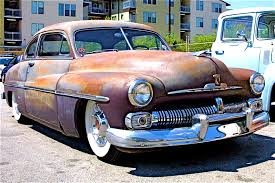
old 1950 Mercury car
1950 Mercury

I’m not a Catholic anymore, but like millions of people, I watched Pope Francis’ visit to Washington D.C and the other parts of America.

Since the day he became Pope, I admired his Christian demeanor and his actions above rhetoric. His compassion for the homeless, the children, and immigrants reminded me of a lesson my mother taught my siblings and I a long time ago.

Those were the days of welfare commodities, those big silver containers of oily peanut butter, Spam, powdered milk and eggs. Mom was a divorcee, a single parent with four kids who went to night school to get her diploma after her full-time job.

An asphalt parking lot separated the housing projects, the apartment buildings where we lived. The lot served as a playground for roller skating, a game of tag, or kickball between cars. 

Amid the old Chevy’s, work trucks, and cars on their last legs, sat a hulking tank of a car, decades old, early 1950’s Mercury. Rimless, faded paint, and worn tires made it look ready for the junk yard. The car had a larger front end than a behind with a huge dashboard full of newspapers and junk, blankets in the rear seat.

We found out a man lived in the car. White stubble dotted his chin and neck against the mahogany of his skin color. He appeared overweight since he wore layers of clothes. A black jacket with sweaters over shirts, blue overalls, red bandanas in his pocket. Skimpy mittens stretched over large hands to ward off the cold. He wore a Charlie Chaplin type hat.

The round man who matched his heavy set car slept in a parking lot of cars that left at dawn for the packing houses, dairy, or vegetable fields. Sometimes he used someone’s water hose to douse his head and face. Drying himself with his bandana.

Sometimes he got drunk on cheap wine, telling us he was from the south, never naming the state or maybe we didn’t ask. There was no work, his jalopy broke down near our apartments and he pushed it into the lot, living there ever since.

When he got drunk he’d reach into his pockets, pull out pennies and nickels and throw them into the air. Kids dove for the coins, it was like bolo, being at a Catholic baptismal when the baby’s godfather threw coins on the church steps to celebrate the event.

One morning he came to our back door, hat in hand, asking my mom if she had some spare bread, water, maybe a sandwich?

We watched her from the kitchen table, making a sandwich with some of our fried Spam. She found a mason jar and filled it with iced tea. He glanced from her to us, to his scuffed brown boots and back again, staring at the concrete.

He took his sandwich and tea with many thanks, a big smile, saying “God bless you,” several times. My mom nodded. When she shut the door one of us said something about the wino and why did she give him some of our food. She corrected us saying he was down on his luck, and he needed help. She grew up during the great depression and knew what hunger felt like and we were Catholics, it was our duty to help other people.

After that, mostly during payday, Mom would make him refried bean burritos, kept hot by wrapping them in aluminum foil. She filled the mason jar with tea and send us out to the parking lot to give to the man. The other neighbors occasionally fed him too, bringing him something they picked from the orchards or field. One day we went outside to play and his car was gone. 

I imagined he found a job, lived a better life, but I don’t know what happened to the homeless man. What I do remember is the compassion my mother showed to someone who was poorer than we were, reminding us we had a duty to help others.
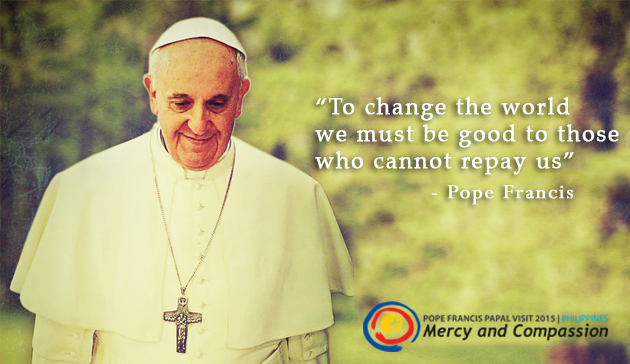
Pope Francis quote on mercy and compassion
Pope Francis on Compassion


Family, Latino culture, Mothers, Strong Women, Wisdom

Hurricane Mother – Part 2


SuperMom Logo by Jose Rios, Flickr.com
SuperMom Logo by Jose RIos, Flickr.com


Last week I wrote about gathering the puzzle pieces of my mother’s first 25 years of life. This made me think about how often we don’t know the stories that our loved one’s carry.

The tragedies, lessons, and life skills my mom learned in the first part of her life set the stage for her next 25 years.

I’m filled with mixed feelings about writing this portion of her life. I wasn’t an observer during this time, I was living this part with her, as a child and a teenager. At that time, I mainly thought of what I and my siblings were going through, as a result, of her choices.

Mom was gone from morning until late at night. We saw her on Tuesday and Thursday evenings, and the weekend. Babysitters came and went, some pretty nice, some not.

The nicest one we called Sugar, she didn’t speak English except for the words to the song “Sugar, Sugar.” The meanest babysitter roared instructions. Mom had a cancelled class and caught the woman chasing my brother with a belt. She threw her out on the street.

Although Mom barely reaches five feet and was petite, she knew how to fight like a bantamweight boxer, a skill she learned sparring with her older brother. This was also a survival skill we saw displayed a couple of times when defending her children from drug addicts or an irate neighbor (that’s another story).


More Puzzle Pieces 

A new life meshes into her own. The stigma is great-“Unwed Mother.” Her baby girl passes off as little sister.

Years after the Korean War ends, the town is still surrounded by military bases. Everything changes when the USO women came to the neighborhood.

“Come to the dance. Free food, good music, appreciative servicemen…” “Sounds fun, what’s the harm, oh, come on,” said among giggles of the single young women.

A gaggle of men, handsome in Air Force uniforms, swarmed the newcomers. One sat behind mom, content to talk, unaware that his soft blue eyes, blond hair, and Kentucky accent mesmerized her into silence.

Her beauty brought him into the barrio, had him speaking Spanish. They married. He adopted two year old little sister/daughter. An anomaly of a couple, even in California.

Three more children, all in a row. Almost a big “Leave It To Beaver” family until alcohol, fear and anger tore them apart. She told him to leave. A regret to this day, even beyond his death. The good recalled with much more frequency than the bad.

Back to stifling packing houses, a heavy apron, aching back, wet wrinkled hands from sorting vegetables. Worked ten hours in silence, not allowed to turn her head left or right, the rules you know. Plenty of time to think of the future: a secretary, a police officer, a social worker.

Bus across the tracks to adult ed to get her high school diploma. The drive to want more accompanied the three-mile walk back, at ten p.m., three nights a week.  At thirty-two years old, she graduated and decided to  attend community college.

Ridicule, jokes, shaming comments from neighbors and relatives. “Who does she think she is, what kind of mother isn’t home for her kids after school, leaving them in the evening, sin vergüenza…” She carried books of knowledge along with her guilt through dark nights on the city bus.

In the early morning she knelt before the statue of the Sacred Heart of Jesus in the staircase niche. In the evening, a votive to the Virgen de Guadalupe. Weekends at Mass.

Government canned food, powdered milk, the kindness of her siblings fed her family. She pawned her wedding ring when the cupboards were empty. Hunger was the only thing that almost broke her.

Every summer for eight years she sent her children to her brother and his wife, angels to the rescue, so she could go back to the packing houses, save money, remove the cross tattoo on her hand, send her kids to Catholic school.

At forty, she graduated from community college, found her first office job, but still wanted more.

Commuting to a university filled her with hope for a future alongside the fear of what was happening at home, her children now teenagers living in the barrio where success stories are few and far between. We moved across the tracks. Strict rules, education, education, education, drummed into our ears.

Strikes, boycotts, Si Se Puede, self-determination. A community activist, volunteer, doer. Doors opened, scholarships bestowed, a donated car from a women’s group. No time for romance, no time for breathing.

Baby daughter left to college after Mom graduated with two Bachelor’s of Arts degrees, at forty-five.