Blog

California Department of Corrections, Female Offenders, Television shows on prison, Women in Prison, Women Prisoners, Writing

Women in Prison: In Front and Behind the Cell Bars

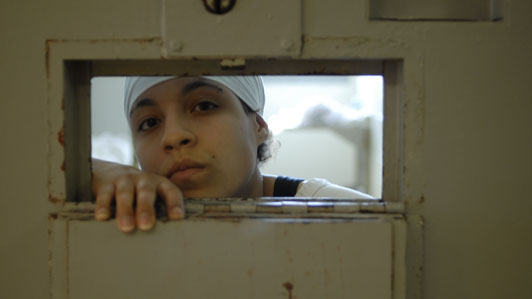
photo from National Geographic
There has been an increase in T.V. female prisoner shows: Lockup, Cellblock 6 (TLC), Babies behind Bars (TLC), Beyond Scared Straight (A & E), and even Oprah’s OWN channel has Breaking Down Bars. Women are the fastest growing prison population in America and some of the toughest to handle.  


The subject of women in prison is a new one for this blog. After a year of posting I think it’s time I wrote about my experiences working in the Criminal Justice system. I spent 28 years working inside of Youth Correctional facilities in California and two years working at work furlough and prison pre-release programs, with male and female inmates, young offenders and older inmates. This has been a huge part of my working life. 


I can’t think of a ‘pretty picture’ to accompany this post so I chose the one that I feel is closest to the reality of life inside a prison. Granted, my life has been as a correctional worker, not as a prisoner. but I offer my perspective of women behind and in front of the cell bars.

My career has affected me in so many ways that all three of my works-in-progress (WIP’s) are about characters on both sides of the law. One of the three WIP’s is set inside of a women’s prison and much of the setting is real, for that particular facility.  

For now I’ll begin with some background, not of my upbringing , but my career back story. In other words, how did I get from Catholic school to working inside of prison walls? 

After changes to my major (Psychology, Teaching, English) I found my niche: Sociology and Criminal Justice. During my Junior year I took a field trip to Lompoc Federal Penitentiary. It wasn’t scary until they let a large group of male inmates into the 16×20 conference room with two Correctional Officers (CO’s) a Caseworker and two teachers. 

It was like a show and tell about the programs inside. I was a shapely twenty year old with long hair to my waist. I felt naked as I sat on a folding chair and tried to make myself as small as possible. The teachers and Caseworker spoke and I heard the passion, and tiredness, in their voices. The passion was for the belief in rehabilitation and the tiredness was from the reality that everyone cannot or will not change. The ‘pitch’ was for student tutors, primarily for literacy tutors. I knew enough about the lives of drug dealers, con men and sweet talk that I was not going to volunteer for the program. 

During my Senior year I had more loans than scholarships and grants. I applied for a paid internship and that is how I ended up working with a Psychologist and two Probation Officers (PO’s) at a 90 day Pre-Release program for Lompoc Fed inmates. The staff mentored me and had me assist in their paperwork, especially the P.O’s. I spent eight months sitting in small group counseling sessions with a different group of eight parolees three times a week, the Psych, and one PO. I experienced the ‘games,’ got tough quick, learned the prison jargon, the Psych’s language, and the PO’s workload. 

My mentors recommended I go into Probation or work at the Juvenile Hall. I decided to apply at a Youth Correctional Facility in my county, graduated with my B.A.in June, and began working in July. I was twenty one years old, a new Youth Correctional Counselor, and my caseload of eight females ranged in age from eighteen to twenty-four. Most of them were older than me. 

The Youth Correctional Facility is under the Division of Juvenile Justice which is under the California Department of Corrections. There have been several changes throughout the years and the facility has housed ages 12-24 year old females to 16-21 year old males. It has been solely for girls and women, and then co-ed, back to all females 12-21 and now it’s coed again. The population has been as high as 1100 to a low of 230. Gender changes and population fluctuates in response to sentencing laws, prison overcrowding, and deteriorating structures. 

A prison is a world of its own. There are staff rules, inmate rules, gang rules, race rules and others that are best left for another time. Every Wednesday, my intention is to show readers this world, the girls and women inside (which I will refer to as female offenders), the sub-cultures, and the hopes and aspirations of young women doing time. 
Family, Family and Social Media, Latino Family Traditions, Parenting

Writer Unplugged and Observing Life

Graphic by Fredrich Terral


Sometimes it’s enough just to observe and not write a darn thing for three days. No notes on the iPhone, no tweeting, no posting on Facebook, no checking on stats, no reading or writing blogs…you get the picture.This was the type of weekend I had but didn’t plan. It was all about observing people in different social settings:nightclub, birthday party, family bar-b-que. 


On Friday night I went dancing at a night spot popular with the 60’s-80’s generation. Now these were men and women ranging in age from mid forties to early seventies dancing up a storm to Motown, Bee Gees, Stevie Ray Vaugh, Santana  and the Gap Band. The lively spirit of people having fun permeated the place. I re-met people from high school, the old neighborhood, and former work places. Yes, there is life after parenthood, life after divorce, life during the empty nest period. There is life to live and enjoy at any age.


Early Saturday morning I drove 4 hours to Northern California with my mother, sister and cousin to attend a birthday party. There’s a wealth of stories that go on during a long drive. My mom reminisced about when she was a young girl and her family followed the crops from Southern California up to Fresno. From picking oranges, lettuce, cotton, almonds, and grapes. She can identify a variety of trees, gnarly bushes, and vines. This led to stories of her parents, three brothers and two sisters, all who have passed on except for her and her sister. The inflections in her voice rose from happiness to wistfulness with momentary seconds of grief. The passing years remind her of the inevitable. It reminds me too. 


My sister and I were in the front seat and began talking about our dating life. Of course, we were whispering. My hard of hearing mother who begins each sentence with “What?” leaned forward. “Don’t whisper, I want to hear.” We’re still hesitant about bringing up our new dating lives in front of our mother not because we’re embarrassed but we still get the 20 questions like we did when we were teenagers.Okay, we really are embarrassed. 


Besides the new guy’s family and job, there are questions about ethnicity and religious affiliation. After we filled her in she did not comment on whether they were Latino or not or whether they were Catholic or not. Seems she is full of surprises. My cousin then asked ‘regular’ questions asking how we met these new men. After a few rounds of laughter, mom commented that we sounded like we were in our second ‘teenagehood.’ She wonders why we whisper. Then I realize I do this to my sons and daughter sans questions of ethnicity/religion. We are our mother–mostly.


My niece’s baby’s first birthday took place in one of those party places for toddlers, complete with colorful muraled walls, loads of Fisher Price toys,enclosed trampolines, costumes for kids, and arts and crafts tables. We had to take off our shoes and wear socks. Pizza slices, juice boxes, fruit ke-bobs, gourmet cupcakes and Mickey Mouse cake pops, decorated the tables all taken care of by uniformed attendants.  

My mom took a look at the fruit and cake pops for her great grand-nephew’s birthday and reminisced about her grandchildren’s birthday parties twenty-some years ago. What happened to our Latino family tradition of Carne Asada, Mexican rice or chicken Molé?  Or  the craziness of Chuckie Cheese. 


Five year olds taking pictures and video with their mother’s cell phones, like they knew what they were doing (and I’m sure they did), also had us reminisce about the big camcorders our husbands used to document our own children’s birthdays where blindfolded kids battled a Piñata for its candy.


And we want to know how do these young mommies fit everything their babies need in those small diaper bags that look like designer purses or backpacks, surely not in the pockets of their skinny jeans. It is not lost on my mother that many more children are bi and multi-racial, quite different in her day. But she asks: why are so many of these kids named after singers, athletes, and actors? 


On Sunday at the family bar-b-que with Tri-tip, chicken, macaroni salad, and chile beans we (the older crowd)  visited by engaging in conversation, which I observed seemed to be lost on our kids generation: the fifteen to late twenty somethings. They may not be fluent in Spanglish or Spanish but they are experts in tech speak. Many of them were engaged with their phones: texting, video chatting, and posting photos on Facebook (or Facelift/Facetime as mom alternately calls it).


So I’m wondering now, what will they observe when they are ‘unplugged.’ What will their long car trips sound like? Will they place their phones (or maybe phone chips) on tiny docking stations and playback their tech memories stored for twenty years in the Cloud? 


What stories will they tell about their childhood, their parents times, their grandparents? Will they know how to cook chicken Molé? Will their children know what a Piñata is?  Will they know what to do when they are unplugged.