
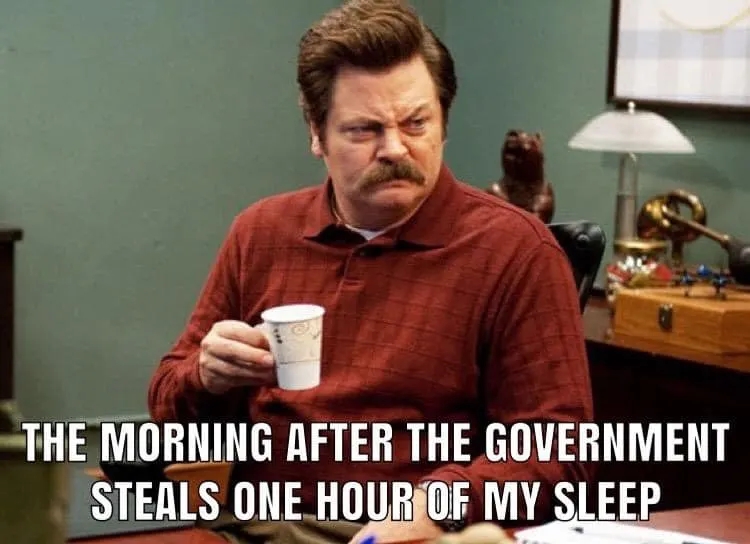
Ugh, Daylight Saving Time. That magical mystery time of year when we all lose an hour of sleep and gain an hour of confusion.
Maybe you handle this better, but I stumble around and am out of sync for a few days.
In the six months between Fall Backward and Spring Forward, I forget how to reset my coffee pot, microwave, and the clock in my car. But my iPhone does the springing or falling automatically, so I am grateful for the little things.
If you’re in California, do you remember that we voted to keep the clock the same throughout the year, or did I dream it?
This week may turn even the cheeriest person into a grumpy Gus. We’re all cranky from losing an hour of sleep and feeling out of step with our world. I usually need an extra cup of coffee to perk up (no pun intended).
And didn’t medical professionals say the springtime change has been linked to an increase in cardiac events?
I read a study that DST disrupted sleep and found an increase in hospitalizations for atrial fibrillation in the days following the springtime transition to DST.
The same study cites that more people have problems falling asleep, mood disorders, and fatal car crashes during DST.
Maybe we’re grumpy because we can’t sleep, have heart arrhythmia, or stay up worrying about car crashes.
I hear the case to standardize the time to year-round has made it to the Capitol with the bill The Sunshine Protection Act. I’m not holding my breath.
The American Medical Association put in their dime (because, you know, inflation means it’s not 2 cents anymore):
our internal clock is not as well aligned during daylight saving time. “Light in the morning is very important,” she says. “Restoring permanent, year-round standard time is the best option for our health and well-being,”
Dr. Jennifer Martin
Daylight Saving Time is a weird and confusing time of year. It’s like the universe is playing a cruel joke on us, messing with our sleep schedules and our sense of time.
But at least we can all commiserate together, grumbling and complaining until we finally adjust to the new time. And who knows, maybe by the time we do, it’ll be time to switch back again.
A poem:
The Day After Daylight Savings Time
Blue numbers on my bedside clock
tell I forgot to change the hour.
This sets routines on haywire.

Like a domestic goat staked
to its circle of earth,
I don’t do well untethered.

I have no hunger for early dinner,
become confused by the sound
of children who seem out

too late for a school night.
They’ve found an extra helping
of daylight to romp on new grass

and can’t contain themselves,
strip off jackets, scatter
like a rag of ponies.

Whatever time says,
their joy insists
on springing forward.

by

Margaret Haase

Take extra care of yourselves this week, and be well.
PS: If you’ve signed up for my monthly newsletter, it will come out on the third Saturday of March instead of the fourth to include news of special promotions and events.

 alvaradofrazier.com