Encouragement, Family, Inspiration, Wisdom, Writing

Perseverance and Blessings

Perserverance-VIctor Hugo, Novelist
Perseverance-Victor Hugo, Novelist

One of the best things that happen to a writer is when someone judges their work as ‘worthy.’

We get excited, do a happy dance, have an extra scoop of ice cream or glass of wine to celebrate.

I say this so I can move to the next bit of news.

Last Friday, I wrote that I decided to make the full moon, Friday the 13th, a double luck day. A few hours after that post I received an email from the CreateSpace people at Amazon Breakthrough Novel Award (ABNA) contest.

My novel was in the quarterfinals, the top 5% of 10,000 entries but it did not proceed to the semi-finals, which is the top 25.

That e-mail was a crusher. I wanted to delete my last post, say “double luck, my a**.”

But I didn’t.

I continued with my vacation, commiserated for a few minutes with my mom and sister. I emailed my writing hermanas. They sent me texts of support and lit the writing candle for me.

After awhile, I sat on the balcony and gazed at the mountain in front of me. My eyes landed on a heart.

Heart in Mountain-alvaradofrazier.com

“Count your blessings,” swung into my mind. “Yes, indeed.”

It’s a blessing to be with my mom, still fairly active in her mid 80’s. It’s a blessing to have close relationships with my sisters and brother. It’s a blessing to have supportive writers who cheer you on and forward. It’s a blessing to go on vacation

After dinner, I watched the full moon rise over a silhouette of mountains while I sipped at a glass of cold Pinot Grigio.

Full moon-Jeffey Sullivan, CC license
Full moon – Jeffry Sullivan, CC license

Over the weekend, I thought about the ABNA. It was a great experience for me.

I had fun, I had hope, and I dreamed.

Nothing wrong with any of that.

Now it’s time for the next steps. Wherever they lead.


Encouragement, Inspiration, poetry, query letters, Writers, Writing, Writing classes, writing conferences, Writing groups, writing tips

Four Secrets to Poetic Prose-Part 2

Secrets-gettyimages.com


I have to tell you, I want to be a better writer.

I have stories to tell the world, and I’m tired of  my seven member critique group being the only ones to read them.

They may be tired of them too.

For almost six years, I’ve been writing stories which became an Adult Contemporary and two YA manuscripts.

I’ve spent the last year sending out queries, synopsis’, revising, and doing it all again. Still, no agent.

If you’re a writer, you might have a similar scenario to tell.

Until that ‘golden’ e-mail or phone call, I need to keep writing and improve what I’ve written.

I will not quit and neither should you.


That’s why I look for low cost classes. So many of us can’t afford to get an MFA or attend $400-$600 conferences.

But don’t let high prices stop you from improving your writing.


A few days ago, I posted the first two secrets to poetic prose, as described by author and poet, Sonya Sones.

Poetic prose refers to a narrative with some of the technical or literary qualities of poetry such as rhythm, patterned structure, or emotional heightening.

Let’s continue with the last two secrets:


3. The Rhythm of Three:

All sound breaks down into some sort of pattern of sounds. The syllables are either unstressed or stressed, pronounced more strongly, which gives us a beat and type of melody. 

In the children’s book, Grandfather Twilight by Barbara Berger, the entire book is almost all written with a rhythm of three (there are ‘non-three’ lines between the rhythm of three):

When the day is done, he closes his book, combs his beard and puts on his jacket.

He lifts the strand, takes one pearl from it, and closes the chest again. 

Can you hear the rhythm?


4. The Use of Trochiac:

Low vowel sounds evoke sadness. Use the ooh, o, um, and ah sounds.

Tell me not in mournful numbers  

Words such as  lost, roam, lunatics, olive, watching, rocking are examples of a trochee.

Lost Dog-gettyimages.com

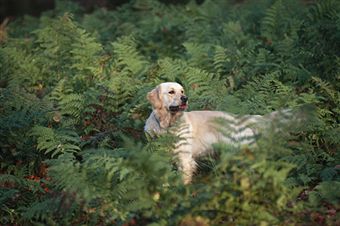
Ms. Sones gave us a prompt: “My dog is gone,” and gave us five minutes to write a few lines using trochee:

My dog is gone, lost, not loaned,
did he roam, lose his way home?
Does he groan somewhere, all alone?
A romp in the grass, and now he’s gone
Is he far from home?
No nuzzles, no cuddles, no paw raised high
Does he wait, watch for me, all alone?


It’s not the best 5 minute poem, but it does sound sad.  Using low vowel sounds is a useful and fairly easy way to express a  mournful or sad scene.

So there it is, four ways to enrich your writing.

Keep looking for courses you can afford, keep reading and happy writing.