A phrase that has resonated with me for many years is the term “Strong Woman.” I first heard these words used to describe my mother when I was 10 years old “…she’s a strong woman.” I knew the person wasn’t talking about my barely five foot mother’s physical strength.
Another time I came across the term was when I worked on a new project for the California Department of Corrections. The objective was to develop a “treatment mall,” akin to the counseling areas in some newer mental health facilities: offenders from different living units meet in one area to attend counseling and living skills sessions in a cooperative, female responsive environment.
The task was to develop this treatment area without building anything new and using the existing prison facilities. The process is too long to describe here, but part of the planning involved selecting correctional staff and some female offenders to develop objectives.
One of the best parts of this project was the naming of our treatment mall. We invited all of the young women to participate by giving the building a name and a motto. Prizes were photographs and pizza. This may not sound like a lot, but in a prison, pizza and pictures are gold. (I won’t mention the illegal stuff that’s also gold).
After much fanfare and anonymous ballots, we had a winner. The name of the building: The Sunshine Mall.
Its motto: Strong Women Grow Here
This blew my staff and me away. I think it resonated so deeply because we felt they understood what real rehabilitation was supposed to be about. It meant some correctional counselors and team got it right with these particular women and that these women were listening.
Since that time, I’ve carried this motto and it’s concept with me. It finds it way into my fiction writing and I seek out books where characters are ‘strong women.’ It’s also made me think about what makes a strong woman.
A strong woman demonstrates several qualities. I could enumerate them but I also want to show examples of contemporary women who exemplify these traits. On the top of my list is:
Grace:The exercise of love, kindness, mercy, favor; disposition to benefit or serve another; favor bestowed or privilege conferred.
“Good Morning America” anchor Robin Roberts broke some bad news to viewers on Monday, announcing she has been diagnosed with MDS or myelodsyplastic syndrome, a blood and bone marrow disorder.
In 2007, Roberts revealed she had breast cancer and underwent a successful surgery to treat it. Though she has been in remission since then, she revealed her new diagnosis is linked to her earlier health battle.
“When I faced breast cancer, your prayers and good wishes sustained me, gave me such hope and played a major role in my recovery,” she wrote. “In facing this new challenge, I ask humbly for more of your prayers…My doctors tell me I’m going to beat this — and I know it’s true,” she wrote in an open letter posted online after she announced her diagnosis on the show.
Here is grace in action:
Grace is not only possessing poise, it’s also an attitude of thankfulness and dignity. Everything, from Robin Roberts voice, body language, and words exude grace. Amid this health challenge she says she is blessed. Her sister is a perfect match for her bone marrow transplant. Roberts demonstrates her grace by telling her viewers that she is:
“… focusing on the fight not the fright.”
“I’m like everyone who faces some life alternating situations, whether it’s your health, finances, or whatnot.It’s getting off the mat and fighting…”
“…This too shall pass…”
I’ll be continuing this “Strong Women,” topic for the next month and I’d love to know what qualities you believe describe a strong woman.
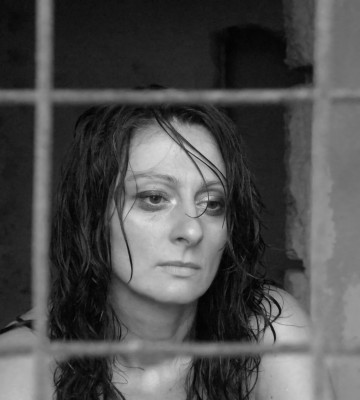
Mother’s Day is coming soon. The date makes me remember the young women in our facility. They became more anxious the closer Mother’s Day came. Several of them had children and most would not see them on that day. Anger, depression, and isolation was usually the result for these young mothers.
California has the largest female prison population in the United States, almost 7,000 women. Nearly 80% of them are parents. Statistics aren’t kept on children, but if we say each offender has two to three children it can be approximated that close to 15,000 children are without mothers. Of these approximately 25% are in foster care, with the majority remaining with grandmothers and relatives.* The numbers are much higher if jails are included.
According to the Women’s Prison & Home Association, Inc.:
Children of offenders are five times more likely than their peers to end up in prison themselves. “One in 10 will have been incarcerated before reaching adulthood.” Surely the statistics on parent-child bonding, trauma, detachment disorders, and depression are high for these children.
In California three prisons house women: Central California’s Women’s Facility in Chowchilla, CA, Valley State Prison, also in Chowchilla-Northern California, and houses more than 5,350 women. The southern area facility, California Institute for Women in Corona, CA houses 1,600 women. Ventura Youth Correctional Facility also houses female offenders under 21 years old. This is in Camarillo, California and at one time had close to 400 young women.
Research from the Bureau of Justice suggests: …visitation significantly increases parent-child attachment,however more than half of incarcerated women are more than 100 miles away from their children. There are other states, like Ohio, Washington, Illinois, Indiana, New York and Albama, which do a far better job at visitation and family reunification. Countries such as Mexico and Germany have prison nurseries, enhanced visitation, and mother-child programs. Research shows that women and children in these programs do much better than without the mother-child contact. There are two programs in California that seek to assist reunification through visitation:
The “Get on the Bus” annual trip from Southern California. The trip takes place close to Mother’s and Father’s Day. They have been doing this volunteer work for 12 years when they made one trip, on one bus, with 17 children. It is a four hour drive from Los Angeles to Chowchilla. For ways to help children visit through this program, here is their website. You can help in any number of ways. The Chowchilla Family Express travels once a week from different major cities. Several churches sponsor the trips providing for meals and expenses. This program is the funded by The California Department of Corrections and Rehabilitation. When I went to the website I found, “(CFE)…is temporarily closed until the state contract is awarded.” All of this boils down to this: California has the most female offenders, with a quarter of their children in foster care, who live far away without regular visitation. I know and I agree that these women are responsible for their own behavior and that punishment is part of the criminal justice system. So why should we care? We should care because innocent children pay for the sins of their mothers. They will suffer through abandonment issues, detachment disorders, and various other traumas that affect their schooling, future relationships, and put them at risk for incarceration themselves. What can you do?
Check to see if your state has any programs such as “Get on the Bus,” visitation.
Lobby and press for more community based residential parenting programs. They are much cheaper than prisons. (There is one three miles away from me and we haven’t had any problems) .
Get your church involved or create a school project that will raise money for reunification trips.
If you have a transition house in your area, for female offenders or parolees, perhaps they can use children’s clothes or toys.
If you know someone who is high risk for incarceration, reach out to her or put her in contact with a community program that can intervene before she loses her children.
Every mother should be able to see their children on Mother’s Day.




 alvaradofrazier.com