Caregiving, Diabetes, Health, Latino culture, Parenting our Parents, Quesadilla Generation, Shingles

Another Chapter from the Quesadilla Generation

Most baby boomers, and some Gen X’er’s, are part of the “sandwich generation,” caring for aging parents. There is also an estimated 8 million Latino baby boomers taking care of both elderly parents and children.  Life this past month has added another chapter to my stories about the Quesadilla Generation.

Illness, death, grief, and caring for an aging parent have filled the days this past month. This was not a good time (not that there is a suitable time) for my mom to come down with an illness that took a month to identify and treat.

After two trips to the ER and a couple of doctor visits,she was finally diagnosed with Shingles. This is an acute, painful inflammation of the nerve ganglia, with a rash usually on the back or abdomen and flu-like symptoms. ( I won’t post a photo of Shingles, they are a little nasty looking, hence the food pictures).

If you have had chicken pox in the past, or if you were vaccinated for it, the virus never completely leaves your system. Even long after the itchy rash and infection are gone, the virus lays in a dormant or resting state in the spinal nerve cells of our bodies. The symptoms of the virus disappear, and are kept in check by our healthy immune systems. 

The risk of developing shingles is much higher in older people. The chances of the virus becoming reactivated doubles every 10 years over the age of 50. That’s why doctors recommend the shingles vaccination at age 50. Personally, I’m hesitant to introduce a live virus into my body, but also concerned about getting this illness. I have to think on that one for another week. 

People with a lowered immune system are also at high risk for developing Shingles. My poor mom had a triple whammy. She is over 80 years, diabetic, and has had acute stress from the loss of her sister.

People who have had Shingles can tell you that there is excruciating pain for several days and weeks. Mom said it was like someone jabbing her in the abdomen with a knife, as bad as labor pains, and she has a high pain tolerance. Days went by with her sleeping almost around the clock, wincing whenever anything touched her rash, and barely tolerating broth. She did pluck my sister’s bush of Yerba Buena dry. It’s a great tea for stomach pain.

The best thing we could have hoped for was the around the clock care given by my sister. As mom’s pain subsided a bit she gained strength and worked her way up to finishing a full bowl of chicken ginger soup, pumpkin pear, and whatever my gourmet sister whipped up that was full of healthy ingredients. 
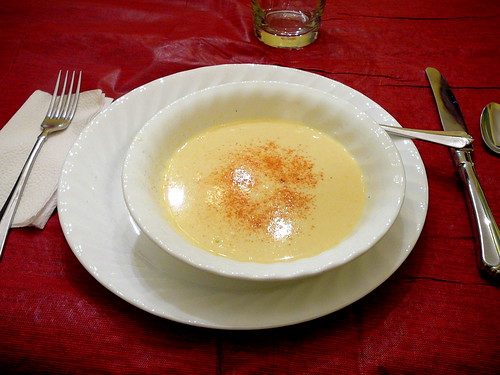


But I was the ‘bad’ sister. When I went over to visit I brought my mom pork tamales and champurrado. Mom took a quick gulp of the champurrado and said she had to hide it from “Nurse Ratchet,” which she now calls my sister. (They are famous for their food fights). With that remark I knew that mom had to be feeling better. 

Champurrado-photo by Sharon123 food.com

Today my sister and I took mom to our church’s Women’s Brunch, a beautiful annual affair, and mom had a great time. She felt well enough to take a spoonful or two of various foods without a stomach upset. So well, that after the last Christmas song was sung I saw her (out of the corner of my eye) sliding a few candies from the centerpiece under her plate. Sister and I had to make a grab for the candies before mom swiped them off the table and into her purse. But thank goodness she feels better, even though it means we have to watch her near a candy bowl. 

Take your vitamins, supplements, de-stress, exercise, laugh, and be well. 


Army of Women, Breast Cancer Action, Breast Cancer Fund, Breast cancer research, Chingonas, Dr. Susan Love, Health, HOW Study, October Breast Cancer Awareness, Un-Pink

How To Go Beyond Pink

I view Breast Cancer awareness from a UN-PINK perspective.This post may irritate a few people, but I’m going to go all chingona on this issue, which is near and dear to my own breasts.
from my collection-by Yrenia Ortiz
  

Last week I shared with you why I couldn’t look at Pepto-Bismol bottles without cringing. This is not from an ungratefulness for the work of Susan B. Komen of any of the several BC awareness campaigns. 

Fifteen years ago that’s what we needed. It got us from unawareness to marketing of the PINK.

The majority of the funding goes to science aimed at treating the disease once a woman has it rather than finding ways to keep her from getting it in the first place.  Article.

Undoubtedly, awareness campaigns and subsequent dollars for making chemo medicines saved thousands of lives, mine included. But what about now, in 2012? How do we go beyond PINK?

How do we change this statistic*?: 

In the 1970’s, lifetime risk of being diagnosed with breast cancer in the US was…1 in 10In the 2000’s the lifetime risk is 1 in 8. 

Maybe we can put aside the PINK for just a few minutes and go all out chingona for: 

Breast Cancer Action

1. WHY: isn’t donating money enough?  Did you know that breast cancer could be caused by a virus? Yes, read about it. We need research to find the cause, thus the cure. The organization “Think Before You Pink” wants you to be informed on where your donations go and how much.

 2. HOW: The majority of women who get breast cancer have none of the known clinical risk factors. This means we don’t know what causes breast cancer or how to prevent it. The Health of Women ( HOW) is a first-of-its-kind international online study for women and men with and without a history of breast cancer.

3. WHAT: can I do?  Partner with research scientists to move breast cancer beyond a cure. Army of Women is doing just that. I joined 2 years ago-it’s totally volunteer. It takes very little time, as few as three hours a year to a couple of hours a month. If someone needs low cost/free services direct them here.

4. WHERE: can my donations/actions make a significant difference? Donate for research for a CURE. Add your name, for stronger regulation and independent research, to this petition. 

5. WHEN:  can you  advocate for a cure? Any day of any month, not only in October. You don’t have to walk 60 miles in a sponsored event (but you can if you want-my sister, the exercise chingona, did). Encourage others to advocate and get educated. Show action by:

  • Participate in a study, 
  • sign a petition, 
  • shop for products where the majority of the money goes to research, 
  • educate yourself on high risk factors, 
  • get at least 30 minutes a day of moderate exercise, 
  • find out what chemicals are in your food/cosmetics/home 
Please understand that this post is my way of letting out my feelings about my own breast cancer journey, one that almost 7 years later, I am still on. (don’t get me wrong, I’m glad to still be around to walk the journey). But, it’s one that I’m reminded of every time I take my tiny white anti-estrogen pill. 

I want to grow older with my siblings and my loved ones. I want to see my kids get married, have grandchildren. Too many people are getting this disease, people who didn’t have ‘high risk’ factors, women as young as 28, friends, acquaintances...women are still dying. 

Be that person who takes action. Go all out chingona on this issue. 
breastcancerfund.org


*National Cancer Institute