
Today is day five of the A to Z Blogging Challenge and the letter is E.
The first thing that comes to mind for E is Enchilada, as in the food, not the idiom of “the whole thing.”
Enchiladas are my mom’s favorite Mexican dish. It’s such a simple dish so I asked her why she liked them so much.
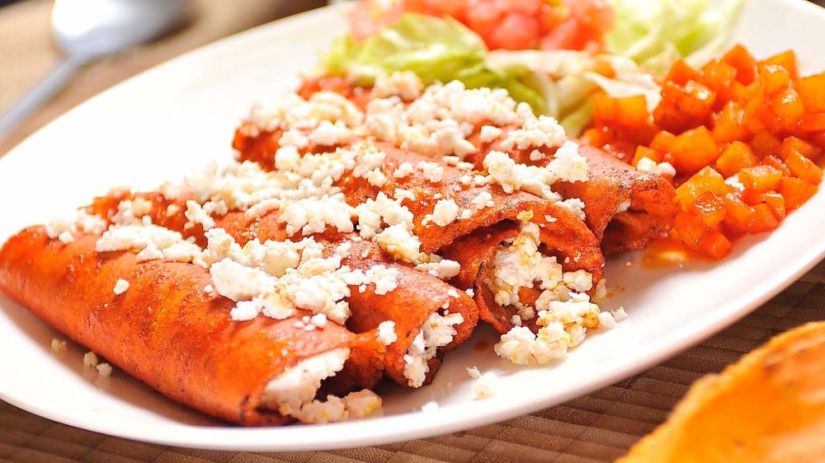
“They remind me of my mother,” she said. “She made them a lot because they’re not expensive, just corn tortillas, chile, and cheese, oh and onion.”
Enchiladas were a poor persons food.
Mom does not like ‘fancy’ enchiladas made with meat. Nor the varieties such as Enchiladas Suizas (Swiss Enchiladas named because they have sour cream on top) or the “green” ones, with tomatillo sauce.
Once she ordered enchiladas at a restaurant. They responded they only had chicken enchiladas.
“Leave out the chicken and give me the cheese,” Mom said.
“We can’t do that, the chicken’s in the sauce.”
“Pick out the chicken and use the sauce for my enchiladas.”
“We can’t do that.”
“Give me the damn enchiladas then.”
Mom picked the chicken out of the enchiladas, forking chicken bits over to the side of her plate. “They could have done this if they wanted too.”
In Mexican cuisine, you can’t make a more traditional dish than enchiladas. First, they use maize for the tortillas, as in corn tortillas, not flour. Second, they use dried chile to make the sauce.
Today, you can find as many varieties of enchiladas, but the original dish reaches back to the Mayan people of Mexico. They first used corn tortillas dipped in chile sauce and wrapped around bits of fish. The use of cheese wasn’t one of the ingredients.
The first recipe was first documented by the Spanish conquistadores, who used other fillings for their enchiladas. Later, the dish made its way into the Mexican cookbooks of the early 1800’s and later the American cookbooks of the 1900’s.
And that’s the whole enchilada.

 alvaradofrazier.com