Children of incarcerated, Female Offenders, Get on the Bus Program, Mother's Day, Parenting, Women in Prison

What I Learned in Prison: Women in Front & Behind Bars #9

correctionalnurse.net

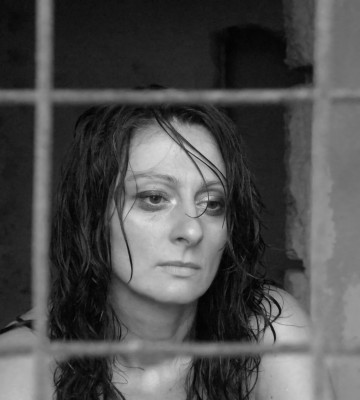
Mother’s Day is coming soon. The date makes me remember the young women in our facility. They became more anxious the closer Mother’s Day came. Several of them had children and most would not see them on that day. 

                  Anger, depression, and isolation was usually the result for  these young mothers.

California has the largest female prison population in the United States, almost 7,000 women. Nearly 80% of them are parents. Statistics aren’t kept on children, but if we say each offender has two to three children it can be approximated that close to 15,000 children are without mothers. Of these approximately 25% are in foster care, with the majority remaining with grandmothers and relatives.* The numbers are much higher if jails are included.


According to the Women’s Prison & Home Association, Inc.:

                  Children of offenders are five times more likely than their peers to end up in prison themselves.  

“One in 10 will have been incarcerated before reaching adulthood.” Surely the statistics on parent-child bonding, trauma, detachment disorders, and depression are high for these children.

In California three prisons house women: Central California’s Women’s Facility in Chowchilla, CA,  Valley State Prison, also in Chowchilla-Northern California, and houses more than 5,350 women. The southern area facility, California Institute for Women in Corona, CA houses 1,600 women. Ventura Youth Correctional Facility also houses female offenders under 21 years old. This is in Camarillo, California and at one time had close to 400 young women. 


Research from the Bureau of Justice suggests: 

           …visitation significantly increases parent-child attachment,however more than half of incarcerated women are more than 100 miles away from their children. 

There are other states, like Ohio, Washington, Illinois, Indiana, New York and Albama, which do a far better job at visitation and family reunification. Countries such as Mexico and Germany have prison nurseries, enhanced visitation, and mother-child programs. 

Research shows that women and children in these programs do much better than without the mother-child contact. There are two programs in California that seek to assist reunification through visitation:

The “Get on the Bus” annual trip from Southern California. The trip takes place close to Mother’s and Father’s Day. They have been doing this volunteer work for 12 years when they made one trip, on one bus, with 17 children. It is a four hour drive from Los Angeles to Chowchilla. For ways to help children visit through this program, here is their website. You can help in any number of ways.

The Chowchilla Family Express travels once a week from different major cities. Several churches sponsor the trips providing for meals and expenses. This program is the funded by The California Department of Corrections and Rehabilitation. When I went to the website I found, “(CFE)…is temporarily closed until the state contract is awarded.” 

All of this boils down to this: 

California has the most female offenders, with  a quarter of their children in foster care, who live far away without regular visitation.  


I know and I agree that these women are responsible for their own behavior and that punishment is part of the criminal justice system. So why should we care?

We should care because innocent children pay for the sins of their mothers. They will suffer through abandonment issues, detachment disorders, and various other traumas that affect their schooling, future relationships, and put them at risk for incarceration themselves. 

What can you do? 

  • Check to see if your state has any programs such as “Get on the Bus,” visitation. 
  • Lobby and press for more community based residential parenting programs. They are much cheaper than prisons. (There is one three miles away from me and we haven’t had any problems) . 
  • Get your church involved or create a school project that will raise money for reunification trips. 
  • If you have a transition house in your area, for female offenders or parolees, perhaps they can use children’s clothes or toys. 
  • Participate in Prison Fellowship’s Angel Tree project. 
  • Donate to Girl Scouts Beyond Bars Program.
  • If you know someone who is high risk for incarceration, reach out to her or put her in contact with a community program that can intervene before she loses her children.


Every mother should be able to see their children on Mother’s Day.


*Women in Prison Project 2010

Faith, Family, Kids, Parenting, stay at home moms, Women in Prison, Working moms

What I Learned in Prison:Women in Front and Behind Bars #8

by spaceodissy via creative commons

Jeannine, an escapee from corporate life, wrote a guest post for the blog “My Name is Not Bob.” After the birth of her baby she suffered postpartum depression, returned to work, and dealt with the increasing demands of her job. A few years later and after upping her medication to levels the doctor balked at, the doctor asked, “Is this what you really want.” Jeannine decided it was not and quit her job. Find Jeannine’s blog and read some of her other insightful posts. 


After I read her post I reflected on my own dilemmas as a working (outside the home) mother. One of the decisions I made was to delay having kids until I received a promotion and had a regular day shift. For the promotion I had to relocate to another correctional facility. Not only was my husband and I away from family, but we didn’t know a soul in this new urban area.Unknown at the time, was that I was pregnant. If I had known, I wouldn’t have accepted the promotion to Investigator. In the prison the investigator works to solve alleged major disciplinary infractions: stabbings, narcotics, weapons, riots. 


Investigators are called into a scene as soon as the incident is cleared. It can be pretty scary walking prison grounds in the dark and worse going into housing units where a stabbing just occurred. In those days (twenty five years ago) we didn’t have  masks, gloves, or kits a la CSI. It was the ’80’s and the height of AIDS epidemic. 


       I, and women in my situation, just had to deal with it and move on. There wasn’t any sympathy about  pregnancy.


Several scenarios clouded my head about catching a disease or becoming injured while performing my job. My husband wanted us to pack up and go home if I couldn’t get a desk job. I was faced with quitting after five years in a career I loved. If I quit, my husband’s job couldn’t support us. 


               What I learned from working in prison was not to whine, blame or act entitled with supervisors. 


 If I could deal with walking into a bloodied cell, I could talk to my new boss about my feelings of safety during my pregnancy. But first I had to think of a solution for the problem I’d be presenting to him, be direct, and willing to hear what I didn’t want to hear. The plan was to have on duty supervisors take pictures of crime scenes, I’d train them even if it was on my own time. It worked, I’d be behind a desk for the next three months. 


After the baby I went through the depression of the impending return to work. I’d never had anxiety bouts before but I had them now. It seemed that guilt overshadowed every moment, awake or asleep. I prayed through those times and tried to shake it off. How dare I want to go back to work? How dare I leave a little baby with a stranger? It wasn’t just me hearing that in my mind, a few male staff made the remarks too.


                                                    Quit, forget this work, it’s not for women anyway


I decide to ask for three more months off of work. To be off any longer than six months meant I’d have to return to the Academy to re-qualify as a Peace Officer. That would take me eight hours away from home for weeks.


Before I had to return to work, my husband was laid off from his job. It was a blessing. He became a stay at home dad for almost a year before he found another job. By that time I was able to transfer back to our home town and we were able to find a wonderful woman to come to our home each day. I felt less guilty that I didn’t have to take the baby out and that I could depend on my mother to help out in a pinch.


 It worked out but I wouldn’t want to go through that again and I didn’t for another four years. The desire to have another child outweighed the memories of my anxieties with the work dilemma. Again, I was blessed to finagle something my colleagues said would never work: becoming a part time Parole Agent. The warden said if I found another part-timer he’d okay the ‘experiment’ for one year. I did and I was happy, the other mother happy, and our the kids happy.

Bluesquarequilting.com

And that’s the way it went, a patchwork of helping hands, prayer, timing and accommodating supervisors. A few years later I had my last child, kind of late in the game. Years later I divorced and it didn’t make life any easier, but we both tried our best for the kids.


After my retirement (peace officers can retire at 50) I became a single stay at home mom with two kids in high school. I also picked up old journals I had written through the years and decided to take some writing classes, try my hand writing a family history, and then fiction. And although I may regret some of the choices I made, I love every minute of this time in my mom life. 


If you work outside the home how have you dealt with feelings of guilt? What’s your patchwork of helping hands?