A dramatic work has only one central character. There may be secondary characters of equal importance to the overall narrative, but in the vast majority of literary accomplishments from Dracula to Candide, Tootsie to RichardIII,Madame Bovary to Priscilla, Queen of the Desert, there is only one central character. This character’s motive—what he/she wants in terms of a goal or objective–drives the story. This is the engine, the seminal force of the action. Action is the operant word in story, fluid and unrelenting, not to be confused with activity, which is often casual and directionless. The central character’s determination to follow what is often an obsessive course propels the action. This energy connects us to the central character. This dominant skein in a story commands our attention.
This imperative may also be subtle. Take Shakespeare’s Romeo and Juliet;
I have stories to tell the world, and I’m tired of my seven member critique group being the only ones to read them.
They may be tired of them too.
For almost six years, I’ve been writing stories which became an Adult Contemporary and two YA manuscripts.
I’ve spent the last year sending out queries, synopsis’, revising, and doing it all again. Still, no agent.
If you’re a writer, you might have a similar scenario to tell.
Until that ‘golden’ e-mail or phone call, I need to keep writing and improve what I’ve written.
I will not quit and neither should you.
That’s why I look for low cost classes. So many of us can’t afford to get an MFA or attend $400-$600 conferences.
But don’t let high prices stop you from improving your writing.
A few days ago, I posted the first two secrets to poetic prose, as described by author and poet, Sonya Sones.
Poetic prose refers to a narrative with some of the technical or literary qualities of poetry such as rhythm, patterned structure, or emotional heightening.
Let’s continue with the last two secrets:
3. The Rhythm of Three:
All sound breaks down into some sort of pattern of sounds. The syllables are either unstressed or stressed, pronounced more strongly, which gives us a beat and type of melody.
In the children’s book, Grandfather Twilight by Barbara Berger, the entire book is almost all written with a rhythm of three (there are ‘non-three’ lines between the rhythm of three):
When the day is done, he closes his book, combs his beard and puts on his jacket.
He lifts the strand, takes one pearl from it, and closes the chest again.
Can you hear the rhythm?
4. The Use of Trochiac:
Low vowel sounds evoke sadness. Use the ooh, o, um, and ah sounds.
Tell me not in mournful numbers
Words such as lost, roam, lunatics, olive, watching, rocking are examples of a trochee.
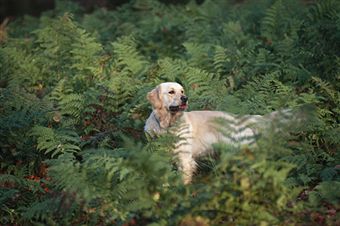
Lost Dog-gettyimages.com
Ms. Sones gave us a prompt: “My dog is gone,” and gave us five minutes to write a few lines using trochee:
My dog is gone, lost, not loaned, did he roam, lose his way home? Does he groan somewhere, all alone? A romp in the grass, and now he’s gone Is he far from home? No nuzzles, no cuddles, no paw raised high Does he wait, watch for me, all alone?
It’s not the best 5 minute poem, but it does sound sad. Using low vowel sounds is a useful and fairly easy way to express a mournful or sad scene.
So there it is, four ways to enrich your writing.
Keep looking for courses you can afford, keep reading and happy writing.




 alvaradofrazier.com