Encouragement, Inspiration, poetry, query letters, Writers, Writing, Writing classes, writing conferences, Writing groups, writing tips

Four Secrets to Poetic Prose-Part 2

Secrets-gettyimages.com


I have to tell you, I want to be a better writer.

I have stories to tell the world, and I’m tired of  my seven member critique group being the only ones to read them.

They may be tired of them too.

For almost six years, I’ve been writing stories which became an Adult Contemporary and two YA manuscripts.

I’ve spent the last year sending out queries, synopsis’, revising, and doing it all again. Still, no agent.

If you’re a writer, you might have a similar scenario to tell.

Until that ‘golden’ e-mail or phone call, I need to keep writing and improve what I’ve written.

I will not quit and neither should you.


That’s why I look for low cost classes. So many of us can’t afford to get an MFA or attend $400-$600 conferences.

But don’t let high prices stop you from improving your writing.


A few days ago, I posted the first two secrets to poetic prose, as described by author and poet, Sonya Sones.

Poetic prose refers to a narrative with some of the technical or literary qualities of poetry such as rhythm, patterned structure, or emotional heightening.

Let’s continue with the last two secrets:


3. The Rhythm of Three:

All sound breaks down into some sort of pattern of sounds. The syllables are either unstressed or stressed, pronounced more strongly, which gives us a beat and type of melody. 

In the children’s book, Grandfather Twilight by Barbara Berger, the entire book is almost all written with a rhythm of three (there are ‘non-three’ lines between the rhythm of three):

When the day is done, he closes his book, combs his beard and puts on his jacket.

He lifts the strand, takes one pearl from it, and closes the chest again. 

Can you hear the rhythm?


4. The Use of Trochiac:

Low vowel sounds evoke sadness. Use the ooh, o, um, and ah sounds.

Tell me not in mournful numbers  

Words such as  lost, roam, lunatics, olive, watching, rocking are examples of a trochee.
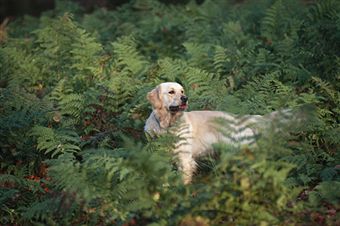
Lost Dog-gettyimages.com

Ms. Sones gave us a prompt: “My dog is gone,” and gave us five minutes to write a few lines using trochee:

My dog is gone, lost, not loaned,
did he roam, lose his way home?
Does he groan somewhere, all alone?
A romp in the grass, and now he’s gone
Is he far from home?
No nuzzles, no cuddles, no paw raised high
Does he wait, watch for me, all alone?


It’s not the best 5 minute poem, but it does sound sad.  Using low vowel sounds is a useful and fairly easy way to express a  mournful or sad scene.

So there it is, four ways to enrich your writing.

Keep looking for courses you can afford, keep reading and happy writing.


Cesar Chavez, Cesar Chavez Day, Dignity, Inspiration, Latino culture, Social Justice, UFW

A March Down Memory Lane

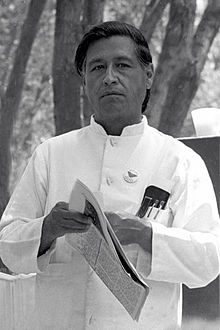
Cesar Chavez-1974
Cesar Chavez-1974


When I drove my car over the railroad tracks, my friend, Dani, said she had never been to La Colonia, the working class neighborhood of my birth and youth.

I felt my memories stir.

We drove pass decorated bakeries, ‘hole-in-the-wall’ restaurants, liquor stores, and the very old, concrete church. A blend of sweet and spicy aromas entered my car.

La Colonia, which literally means, “The Colony” or neighborhood, had and still has a negative connotation by many because of the crime-much of it perpetuated and unevenly reported by the media.

Police cars blocked off a few of the streets, so I went down the well traveled pot-holed alleyways to find parking.

“Those fences must be ten or twelve feet,” my friend, a retired teacher, remarked on the chain link fences surrounding an elementary school. “I’ve never seen them that high.”

We left my mom off so she could join the people on the fire truck. In her eighties now, she didn’t have to walk the 4.5 miles to mid-town.

I felt proud of my mother. She always “walked the talk.”

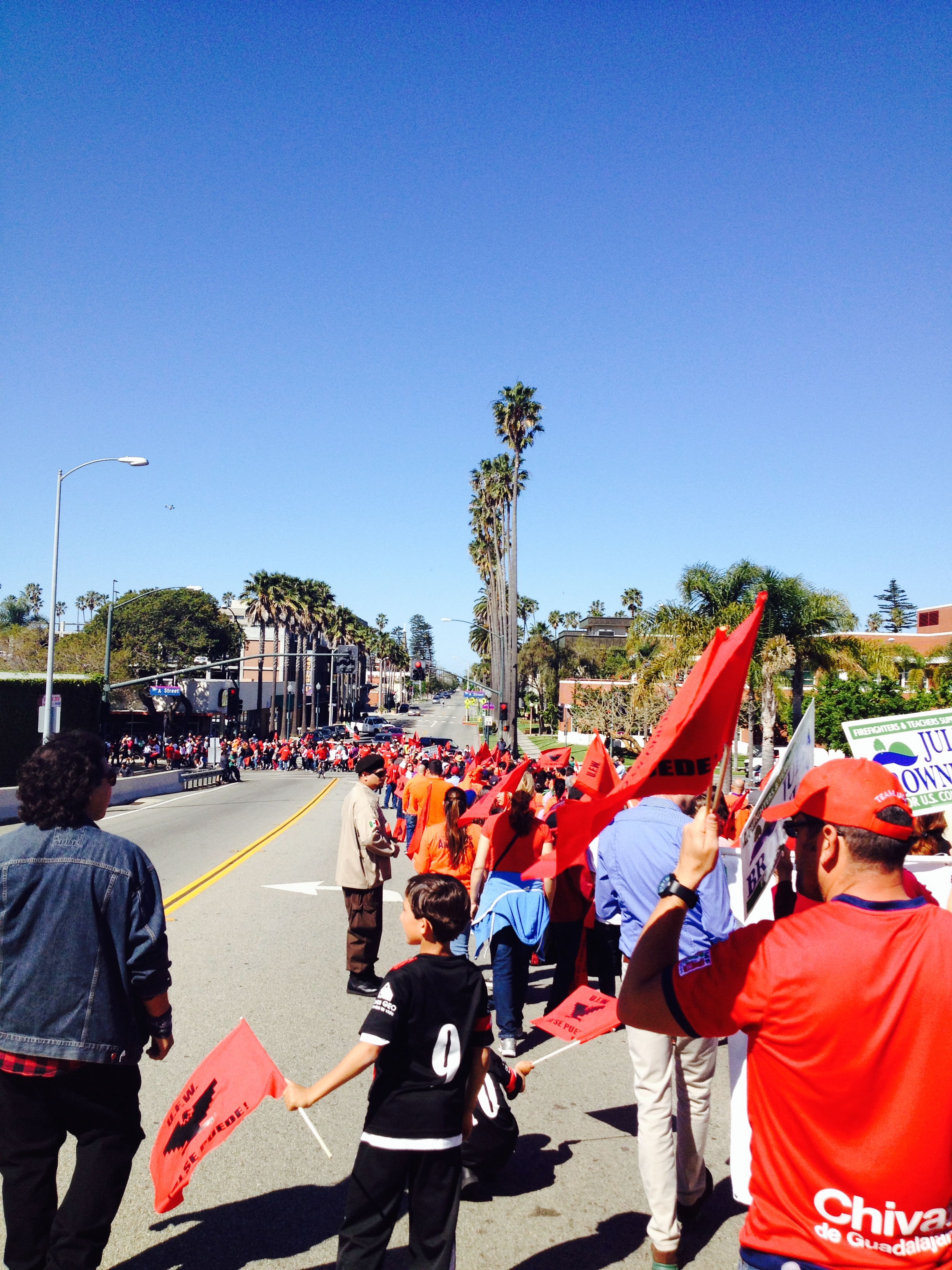
Dani and I walked a few streets to join the well organized crowd of 1,000 people for the commemorative march for Cesar Chavez day. (A holiday in only 11 states). I smiled to see so many people on an early Sunday morning.

Around me were monitors for crowd control. While Dani and I waited for the march to begin I stepped outside the double yellow street line to snap a photo. One of the monitors waved at me to get back in line-just doing her job and a good one at that.

Cesar Chavez March-Oxnard, CA-alvaradofrazier.com

The signal was given to begin. Women with strollers, a Brownie and Daisy troop, a Congresswoman, and people of all ages holding UFW flags or wearing T-shirts depicting Cesar Chavez or Dolores Huerta began to move forward.


While we walked, I pointed out the housing project. “It looks so modern now, like condo’s, not at all how they looked when I lived there,” I said. Back in the 60’s/70’s the ‘projects,’ were flat topped, square looking buildings painted army green and dingy yellowed cream.


The roofs and overhang section had hundreds of rocks, which were used for many a rock fight. I noticed that the old telephone poles still abounded, their low hanging electrical lines a hazard.


At the corner, the church where I had my eight grade graduation and my first marriage, stood with a big banner across it, “Mariachi Mass for Mother’s Day.” Behind that church was the Catholic grammar school, where my sisters, brother, and cousins attended first to eighth grade.


“Hey, wait, are some of these places in your story?” Dani had read one of my manuscripts.

“Yep, my neighborhood is the setting,” I said with some nostalgia.


Soon we passed small houses, many filled with flowers and fruit trees, squeezed into miniscule front yards. Several women and children leaned on their fences and watched us walk by, a moving wave of red flags, banners, and colorful tee-shirts.


An elderly man in a walker stood on his porch. With one hand, he gripped his walker, in the other he held up his red with black eagle flag.


The red line moved forward as a slow wave of water. Chants of “Si Se Puede,” “Viva Cesar,” and “Justice,” rang out around us. I felt my heart stir.


Cesar Chavez March-Over the Bridge-Oxnard, CA-alvaradofrazier.com

The march slowed to a stop as we made the turn to the bridge. “I remember when we didn’t have a bridge,” I said. “We took the city bus to school. If the train was stuck on the tracks, which happened half the time, their was no way out of Colonia.

The group of us would be late for school. When I went into the office for a late note, someone would inevitably say, ‘must be a Colonia kid.’

Over the bridge we flowed, 1,000 of us, to the plaza park area. My march down memory lane was over but it’s never forgotten.

Cesar Chavez Day March-Oxnard, CA-alvaradofrazier.com


After the march ended and the Aztec Dancers finished with a ceremonial dance, we entered the movie theater to watch a movie on Cesar Chavez.

The film was very well done, with historical facts blended with personal, family dynamics.

I have to say that Michael Peña and America Ferrera did a much better job than I thought they would, based on their other movies. I wished Rosario Dawson, as Dolores Huerta, was given a meatier role as Dolores Huerta deserved.

This movie is one that everyone should see to further their knowledge of social justice, non-violent activism, and history.

Happy Birthday, Cesar, and may future generations come to recognize your non-violent work for social justice, worker’s rights and equality.