Latino culture

A to Z Challenge: N is for Nina

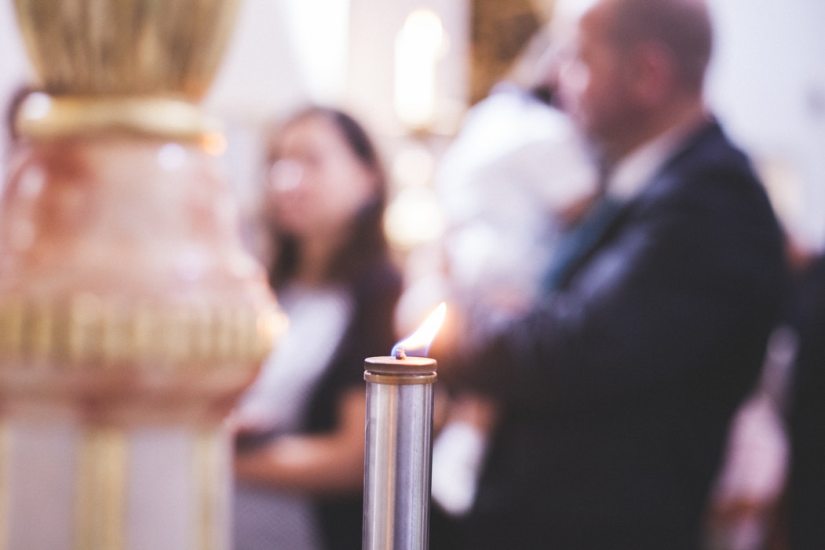
parents awaiting baptism, photo by @gardient for unsplash.com


Today’s letter can be confusing. It’s an N which is short for a P word.

N is for Nina, which is the slang word for Godmother in Spanish; Nino is Godfather.

This is not to be confused with the word “niña,” where the tilde (~) over the ‘n’ means “little girl.”

The correct word for Godparents is Padrinos. (I know this further complicates the letter N).

It may be that a child can’t say the entire word “Padrin/a,” so he/she shortened it to “Nina” or “Nino.”

To be a godmother/godfather is to be chosen.

Parents of an infant, in the Catholic faith, chose a man and woman (who must also be Catholic by baptism) to preside over the upbringing of their infant if they die.

The main responsibility is to bring the child up as a Catholic. In effect, the padrinos are the spiritual parents. But, the ninas and ninos also partake in the baptismal ceremony and host the baptismal celebration.

If you’re Latina you aren’t necessarily Catholic, especially in the last thirty years, so this custom is no longer as popular as before.

So now, if you hear someone, under thirty years of age called Nina, it’s probably her birth name.


Latino culture

A to Z Challenge: M is for Madre (Mother)

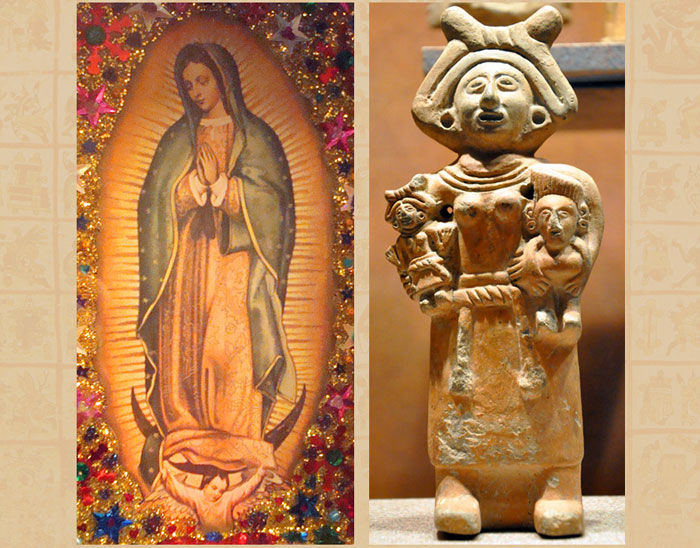
Our Lady of Guadalupe and Tonantzin

Today we come to the letter M.

M is for Madre or Mother; specifically the Mexican Mom.*


In Pre-Columbian times, there were many goddesses worshiped, notably the Aztec goddess Tonanztin, which in the Aztec language of Nahuatl means “Our Sacred Mother.”

In some Pre-Columbian societies, a woman who died in childbirth was deemed a warrior. (Many mothers will tell you they are indeed warriors).

In Mexico, Our Lady of Guadalupe is Mexico’s spiritual mother, loved and revered in Latin America and the U.S. (There’s a picture/statue/candle of OLG in every Mexican Catholic household whether you live in Mexico or the US).

Mexican mothers, madres, along with other Latino cultures, are said to be placed on a pedestal and given great respect. (Which my mother reminded us of many times).

This high cultural value of la madre may be a result of this history and other cultural norms.

Whichever is the case, a Mexican mother comes imbued with a lot of power in the household. (And don’t you forget it, because you’ll be reminded).

Since we are no longer in Pre-Columbian times, some of the reverence has rubbed off.

Which brings me to these memes to help you understand the Mexican Madre.


A normal mom has arguments…
A Mexican mom doesn’t need them because she’s your mother… ¡Y te callas!

Read this article for 14 more differences between a non-Mexican and Mexican Mom.

Okay, that’s enough for today’s letter. See you next week!

*All said in jest; my madre’s a saint!