Caregiving, Diabetes, Health, Latino culture, Parenting our Parents, Quesadilla Generation, Shingles

Another Chapter from the Quesadilla Generation

Most baby boomers, and some Gen X’er’s, are part of the “sandwich generation,” caring for aging parents. There is also an estimated 8 million Latino baby boomers taking care of both elderly parents and children.  Life this past month has added another chapter to my stories about the Quesadilla Generation.

Illness, death, grief, and caring for an aging parent have filled the days this past month. This was not a good time (not that there is a suitable time) for my mom to come down with an illness that took a month to identify and treat.

After two trips to the ER and a couple of doctor visits,she was finally diagnosed with Shingles. This is an acute, painful inflammation of the nerve ganglia, with a rash usually on the back or abdomen and flu-like symptoms. ( I won’t post a photo of Shingles, they are a little nasty looking, hence the food pictures).

If you have had chicken pox in the past, or if you were vaccinated for it, the virus never completely leaves your system. Even long after the itchy rash and infection are gone, the virus lays in a dormant or resting state in the spinal nerve cells of our bodies. The symptoms of the virus disappear, and are kept in check by our healthy immune systems. 

The risk of developing shingles is much higher in older people. The chances of the virus becoming reactivated doubles every 10 years over the age of 50. That’s why doctors recommend the shingles vaccination at age 50. Personally, I’m hesitant to introduce a live virus into my body, but also concerned about getting this illness. I have to think on that one for another week. 

People with a lowered immune system are also at high risk for developing Shingles. My poor mom had a triple whammy. She is over 80 years, diabetic, and has had acute stress from the loss of her sister.

People who have had Shingles can tell you that there is excruciating pain for several days and weeks. Mom said it was like someone jabbing her in the abdomen with a knife, as bad as labor pains, and she has a high pain tolerance. Days went by with her sleeping almost around the clock, wincing whenever anything touched her rash, and barely tolerating broth. She did pluck my sister’s bush of Yerba Buena dry. It’s a great tea for stomach pain.

The best thing we could have hoped for was the around the clock care given by my sister. As mom’s pain subsided a bit she gained strength and worked her way up to finishing a full bowl of chicken ginger soup, pumpkin pear, and whatever my gourmet sister whipped up that was full of healthy ingredients. 
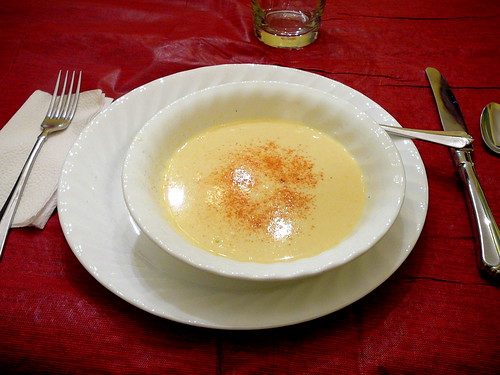


But I was the ‘bad’ sister. When I went over to visit I brought my mom pork tamales and champurrado. Mom took a quick gulp of the champurrado and said she had to hide it from “Nurse Ratchet,” which she now calls my sister. (They are famous for their food fights). With that remark I knew that mom had to be feeling better. 

Champurrado-photo by Sharon123 food.com

Today my sister and I took mom to our church’s Women’s Brunch, a beautiful annual affair, and mom had a great time. She felt well enough to take a spoonful or two of various foods without a stomach upset. So well, that after the last Christmas song was sung I saw her (out of the corner of my eye) sliding a few candies from the centerpiece under her plate. Sister and I had to make a grab for the candies before mom swiped them off the table and into her purse. But thank goodness she feels better, even though it means we have to watch her near a candy bowl. 

Take your vitamins, supplements, de-stress, exercise, laugh, and be well. 


Ancestors, Antepasados, Coping with Grief, Grief, Latino culture, Latino family tradition

Remembering Antepasados/Ancestors

My aunt, Tia Connie, decreed by the doctor to live for perhaps six more months, passed on a few days ago-a month after the pronouncement.  

It’s true that she had a long life, close to 88 years, on this side of the universe. But it’s also true that 88 years is not long enough for her family.


My mother’s sister, Concha, or Connie as she was known, was her only connection to the ancestors, antepasados , those who came before. 

It is like the ancestors held threads in their hands, to the past, present and future. First there was an abundance of bright colored threads, as strong as three ply twine, with numerous threads connecting and lengthening like an Aztec Codice. Because we did not have abuelos, our tio’s and tia’s were our ‘anchor’ threads.

Mom’s parents died when she and her younger sister were children, leaving her eldest sister a mother figure at 14 years of age, her second to oldest brother, of 15 years of age, the father figure. The eldest brother, 17 years old, enlisted in the Army when WW II commenced.  All of them gone now. Now only one of those anchor threads remain. 


The aloneness reverberates through my mother’s grief. On the afternoon of my aunt’s passing, I went over to my mother’s home to give her the unfortunate news. She tells me she ‘felt’ her sister pass that morning. Mom has been ill for a couple of weeks and wonders, out loud, how long she has left. There is fear in her voice. She says she’s not ready.

Her statements fill me with anxiety. I feel pressure in my stomach, a thumping in my chest. Mom is my only connection to my antepasados now. My biological father is still alive, a couple of years older than my mother, but I have never met him. I don’t have a grip, not even a fleeting touch to that side of my heritage. My hands and heart have always been firmly held in the Alvarado Gutierrez histories that now include several different surnames.

Part of the preparation for my aunt’s funeral has been the gathering of photographs from her own collection and my mothers. My cousins, two granddaughters and I comb through several large sticky paper photo albums. 

One of the books has a warning taped to the inside cover: “Don’t take these photos,” signed with the full name of my aunt. My aunt was a homemaker, single mom, working mom, grandmother, great grandmother and great-great grandma. She was simply “Nana” to the subsequent three generations.

Her photographs give a pictorial to her familial codex. Black and white photos from the 1940’-50’s of beautiful young sisters with cousins, friends, husbands and children fill one album, meticulously labeled with names. 

Polaroid snapshots, from the 60’s-70’s, mark birthdays, baptisms, and weddings. We travel through decades of fashionable clothing, hairstyles, automobiles, and living room furniture, stopping for family stories along the way. We remark at how young they and we once were-also thinner, and seemingly taller. Memories and laughter fill the air. Antepasados permeate these pictures.

The photo albums from the 80’s onward are dotted with grandchildren, grandnephews, great grand children and numerous school photographs, as she was a ParaEducator for the local elementary school district.  

Today my cousins have more funeral planning. I’ll help them write the obituary, order flowers, visit my mother, and then print out the last photograph I took of my mom and her sister two days before she passed on. 

We will gather together soon, at a velorio, wake, rosary and Mass in my tia’s honor. We will strengthen the threads of our lives, anchoring our children and children’s children, holding onto our families for what I hope is a very long time.