
Today we come to the letter M.
M is for Madre or Mother; specifically the Mexican Mom.*
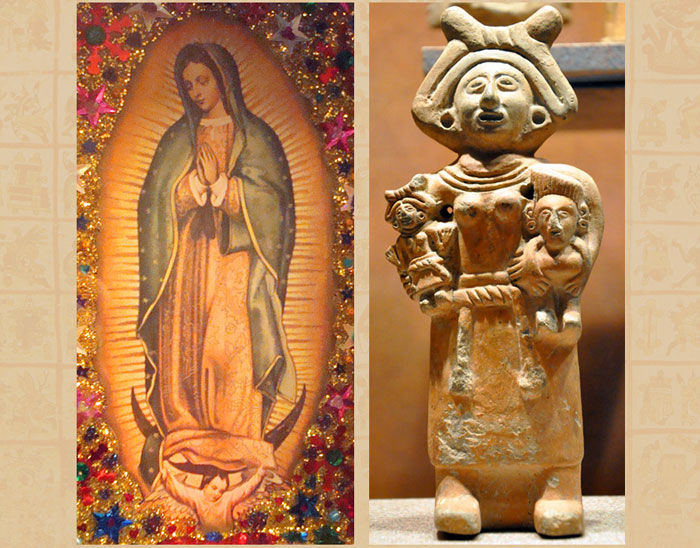
In Pre-Columbian times, there were many goddesses worshiped, notably the Aztec goddess Tonanztin, which in the Aztec language of Nahuatl means “Our Sacred Mother.”
In some Pre-Columbian societies, a woman who died in childbirth was deemed a warrior. (Many mothers will tell you they are indeed warriors).
In Mexico, Our Lady of Guadalupe is Mexico’s spiritual mother, loved and revered in Latin America and the U.S. (There’s a picture/statue/candle of OLG in every Mexican Catholic household whether you live in Mexico or the US).
Mexican mothers, madres, along with other Latino cultures, are said to be placed on a pedestal and given great respect. (Which my mother reminded us of many times).
This high cultural value of la madre may be a result of this history and other cultural norms.
Whichever is the case, a Mexican mother comes imbued with a lot of power in the household. (And don’t you forget it, because you’ll be reminded).
Since we are no longer in Pre-Columbian times, some of the reverence has rubbed off.
Which brings me to these memes to help you understand the Mexican Madre.

A normal mom has arguments…
A Mexican mom doesn’t need them because she’s your mother… ¡Y te callas!
Read this article for 14 more differences between a non-Mexican and Mexican Mom.
Okay, that’s enough for today’s letter. See you next week!
*All said in jest; my madre’s a saint!


 alvaradofrazier.com