Artist Frida Kahlo, Chingona, Empowerment, Frida, Hope, Latino Rebels, Maribel Hernandez Designs, Self Identity, Strong Women

Reasons to Celebrate Frida Kahlo’s Birthday

Around the blogosphere and Facebook, many are paying tribute to the artist, activist, feminist icon and chingona Frida Kahlo. Last year I remembered her anniversary.  Today is her birthday.  

https://www.facebook.com/LatinoRebels

Over a hundred years after her birth, Frida remains memorable. In addition to her art, much of this has to do with her honesty about emotional and physical pain, her activism, her love of country and her self-identity as a woman. These are reasons to celebrate Frida’s birthday. 

Frida Kahlo produced 143 paintings, 55 of which are self-portraits. When asked why she painted so many of these, Frida replied:

 “Because I am so often alone….because I am the subject I know best.”

Her honesty in her response is precisely why she is remembered. Similiar to her au naturel face of unplucked eyebrows and unshaven upper lip, this was a woman who was comfortable with her identity. What she highlighted in many photographs, was her indigenous and mestizo roots and the culture of Mexico. 


This was a woman who lived a life in physical pain from several injuries and still painted.

 “I am not sick. I am broken. But I am happy to be alive as long as I can paint.” * 

.
She was a woman who lived a life marked by emotional pain and depression. Her beloved mother, Matilde Calderon, died of breast cancer. Her father, who encouraged her to paint after her horrible accident died of a heart attack. She had several miscarriages. Her husband, Diego Rivera, was infamously unfaithful.


“I drank because I wanted to drown my sorrows, but now the damned things have learned to swim.” **

Frida was a ‘relatable’ artist. Carlos Fuentes, famed Mexican novelist said: 

“Frida found a way of painting pain – of permitting us to see pain and in so doing, reflecting the pain of the world. … She is a figure that represents the conquest of adversity, that represents how – against hell and high water – a person is able to make their life and reinvent themselves and make that life be personally fulfilling… Frida Kahlo in that sense is a symbol of hope, of power, of empowerment…”

Frida’s philosophy of life was described just days before her death, in her still life, using the words Viva La Vida (Long Live Life). 

This was a woman who took pain and depression, placed it on canvas along with her vision, and created beauty. It takes a strong woman to translate tragedy into beauty.  

 “It is not worthwhile,…to leave this world without having had a little fun in life.” ***

That, right there, sums it up. Happy Birthday, Frida.


*Letter to Ella Wolfe, 1938, quoted in Frida: A Biography of Frida Kahlo by Hayden Herrera In a footnote, Herrera writes that Kahlo had heard this joke from her friend, the poet José Frías.

**Quoted in Time Magazine, “Mexican Autobiography” (27 April 1953) a year before her death.

*** Smithsonian Magazine

Book Review, Books, Justin Torres, Latino Literature, Sandra Ramos O'Briant, Strong Women, Summer Reads 2013, The Sandoval Sisters' Secret of Old Blood, We The Animals

Two Must Read Books

gettyimages.com

Mild heat and sunshine warmed my neck of the Oxnard Plains for a whole five days. So warm (76-80 degrees) we could actually visit our beautiful beaches and plunge into the 65 degree Pacific Ocean. 

I know, we’re weather spoiled rotten here on the Southern California coast.

But the June gloom had its pluses. Cold weather thick with a marine layer is a reading opportunity waiting to happen. I must confess I sat in a comfy chair and read two books in 8 evenings instead of taking a walk. 

My reading tastes lean towards contemporary fiction, historical fiction, memoirs and crime thrillers. When the characters are of other cultures, set in exotic locales, and have a smattering of humor, other languages, and interesting protagonists, the book is usually placed on my “To Be Read,” list.

Add caption

Wait, there is one more ‘test.’ The opening page has to grab my interest and make me want to read the paragraph, and the next few. 

Although my summer reading list of Latina/o books shortened by two, the stack on my end table and Kindle has risen by three other non-Latina/o writers.  

But on to a short review on my recent reads: 

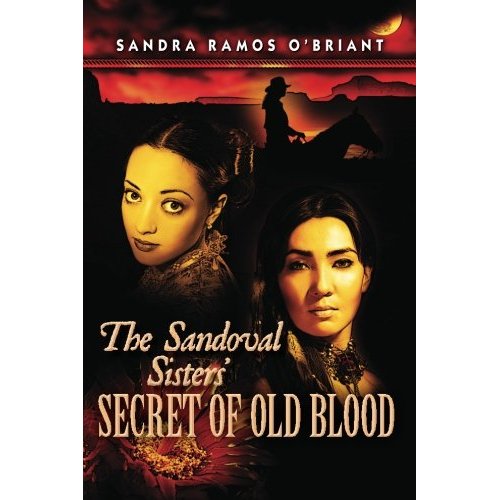
1. THE SANDOVAL SISTERS’…

The first few lines passed the ‘test,’: 

“All that praying and what does Teresa leave me? Daughters!” Estevan had no time for Alma and Pilar and left them completely in my hands.

The setting is before and during the Mexican-American war of 1848, in Sante Fe, New Mexico. It’s a family saga of arranged marriages, a runaway bride, secrets, witchcraft, and loyalty.

Ancient journals are a central focus for the Sandovals. These diaries hold the family genealogy, along with the family secrets, escapades, land grants, murders, and recipes that range from food, to love potions, and revenge. 

The three sisters depend on each other during this turbulent time, imbued in the politics of  war, class, and country. They grow into strong assertive women despite their father. 

Historical fiction has to incorporate the time period, and the author does this very well. We hear about the wagons coming through to homestead, the Spanish landowner’s hacienda’s, kidnapping of the indigenous people, slavery, and the daily life of the people in the late 1800’s.

What I didn’t embrace, as much as the first three quarters of the book was the story of Monique, after her rescue. 

The last chapter implies there will be a sequel to the book. (In fact, after “The End,” my Kindle has a first chapter titled “First, We Were O’Reillys.”) The sisters are in their early twenties to thirty years of age by the final chapter, so there is plenty of material for a series about the Sandoval Sisters. 

2. WE THE ANIMALS by Justin Torres

See Book


This is a highly celebrated, awarded and reviewed book, first published in Sept. 2012. It’s a short book, 125 pages, and fast paced.

The first few lines of the novel seemed innocuous but then they built up into a crescendo of emotion. As a reader I had a good picture of who these boys were and I wanted to know where they were going or had gone. 

We wanted more. We knocked the butt ends of our forks against the table, tapped our spoons against our empty bowls; we were hungry. We wanted more volume, more riots. We turned up the knob on the TV until our ears ached with the shouts of angry men…We were six snatching hands, six stomping feet; we were brothers, boys, three little kings locked in a feud for more.


How did that feel to you? I could see their faces, fists, and fury. The story fully characterized each brother, ages 6, 8, and 10. Heartbreaking, tumultuous times interspersed with funny or tender moments marked most chapters. Sometimes you wanted to put down the book, just for a breather, only to find your place again and keep reading. 

The novel is a coming of age story voraciously told by the youngest brother, the author. His parents rage, fume, drink, and are all together depressing, but human. 

With it’s tenacious prose and pace, the novel reminded me of Jack Kerouac and Junot Diaz. Maybe they were Justin Torres’ older brothers in another life. The book is that great.

If you haven’t made time for reading, get to it. Take a summer trip that only a good book can give to you.