Hope

How do we reconcile Spring when the world is burning?

Hello,

Spring is synonymous with hope, resurrection, and awakening. Sunlight and warmth bring smiles, memories of longer days, and warmer nights.

With barely a sigh of hesitant relief that the covid pandemic slid to the unmasking of people in many places, another disaster arose.

How do we reconcile this budding joy when the world is burning? When bombs fall on pregnant mothers and the innocent?

How do we see hope on the muddy snow-trodden road filled with humanity carrying their world in a suitcase, a stroller, or backpack?

Few people can translate what they feel into poetry, art, and the written word. I think this Ukrainian poet Lyuba Yakimchuk gives us an understanding. She lost her home in Donbas to Russian occupation in 2014 and fled to Kyiv, which Russians have sought to destroy.

Language is as beautiful as this world. So when someone destroys your world, language reflects that.”

Lyuba Yakimchuk

prayer

Our Father, who art in heaven
of the full moon
and the hollow sun

shield from death my parents
whose house stands in the line of fire 
and who won’t abandon it
like a tomb

shield my husband
on the other side of the war 
as if on the other side of a river
pointing his gun at a breast
he used to kiss

I carry on me this bulletproof vest
and cannot take it off
it clings to me like a skin

I carry inside me his child
and cannot force it out
for he owns my body through it

I carry within me a Motherland
and cannot puke it out
for it circulates like blood 
through my heart 

our daily bread give to the hungry
and let them stop devouring one another

our light give to the deceived
and let them gain clarity 

and forgive us our destroyed cities 
even though we do not forgive for them our enemies

shield from me 
my husband, my parents
my child and my Motherland

and lead us not into temptation
to go down with this rotting world 
but deliver us from evil 
to get rid of the burden of a Motherland – 
heavy and hardly useful

Translated by Oksana Maksymchuk and Max Rosochinsky
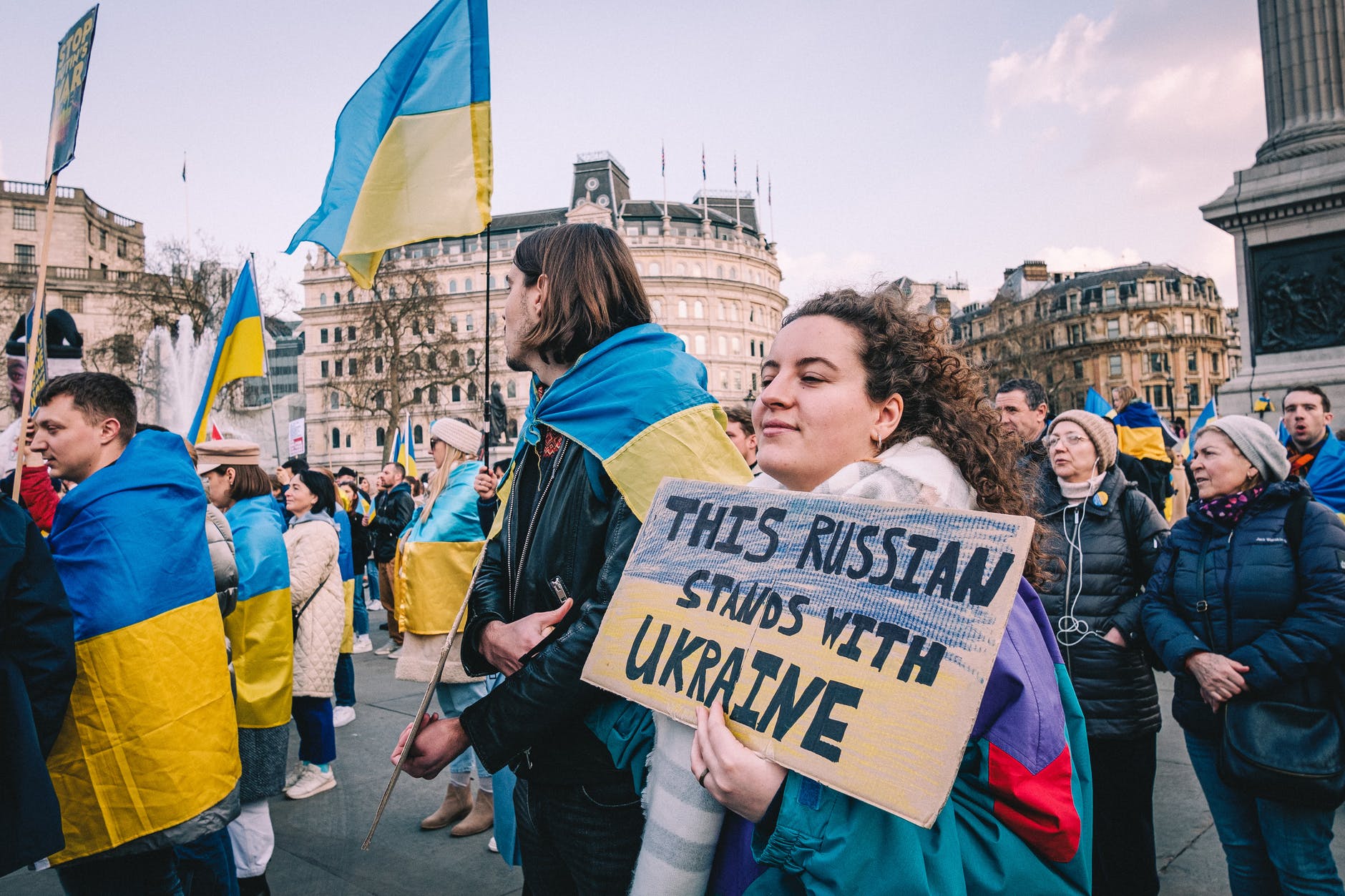
Photo by Ivan Bandura on Pexels.com

The blossoming of the days ahead seems incredibly difficult and we breathe and pray for an end to this madness.

I hope a loosening of the chest begins and our breathing relaxes although all is not good with the world. But breathe hope anyway and step forward to find a way to joy. Leave behind the thoughts of fear and replace them with the thoughts of love and hope.

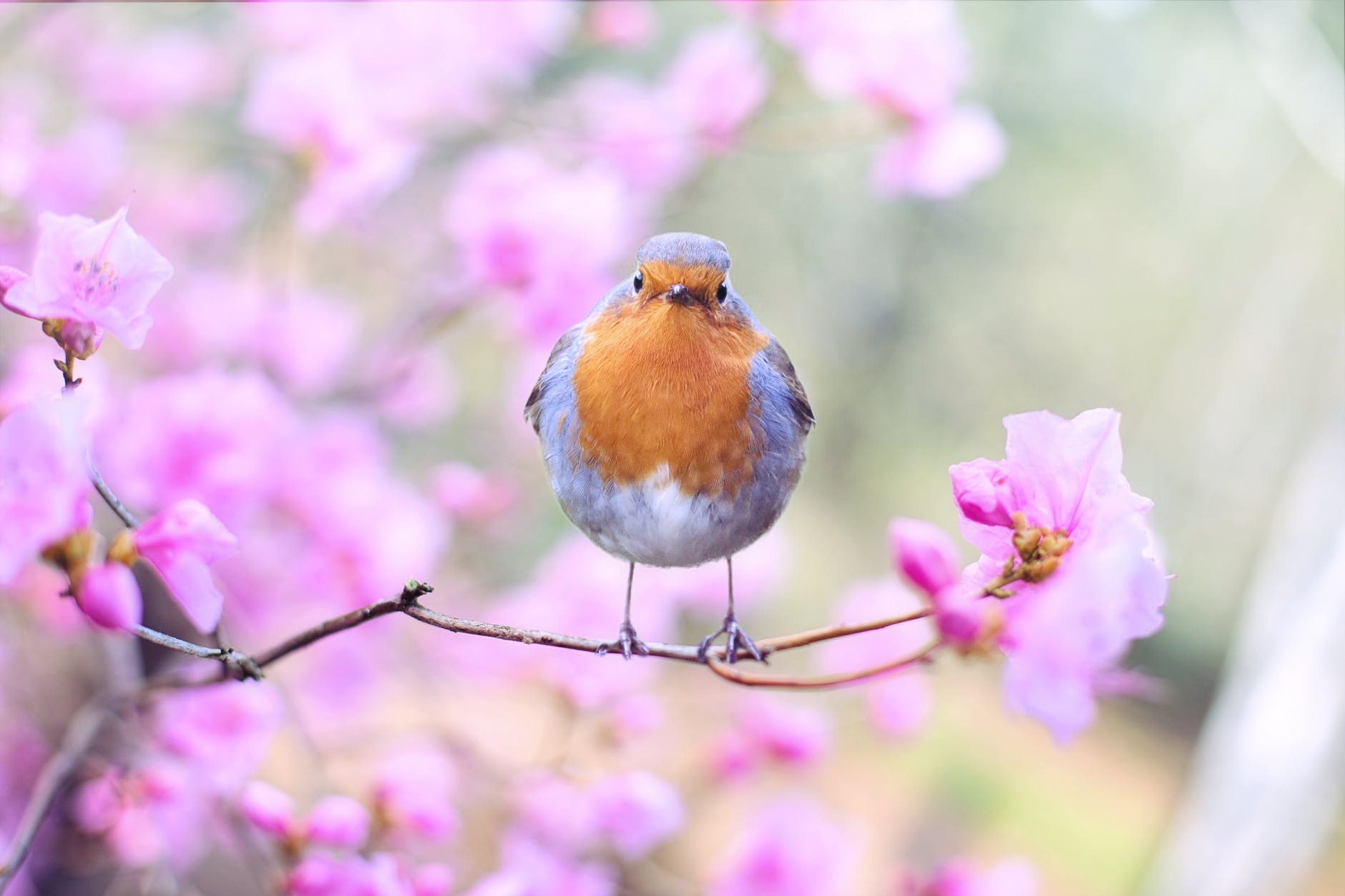
Seek out the crocus in the snow, the yellow of daffodils, and the budding roses. Notice when the grey sky lightens to shades of blue and the rays of sun stream through leafing trees and birds twitter and children sing.

 Staying alive is what gives you a chance to shape the future.”

Lyuba Yakimchuk
Latino culture

Día De Los Muertos is Coming, Are You Ready?

Day of the Dead Ofrenda honoring Mexican women in the arts, 2015.


There is so much energy in the air I can feel the spirits descending.

November 1st is generally referred to as Día De Los Inocentes (Day of the Innocents) or Día De Los Angelitos (Day of the Little Angels).

November 2nd is the actual DÍa De Los Muertos (Day of the Dead).

The past week in America has been particularly sorrowful. Perhaps, honoring the departed on November 1st and 2nd is helpful to you.

During our childhood, we had altars year round. They always contained the Virgen de Guadalupe, Sacred Heart of Jesus, votives, and one or two photos of someone who recently passed.

To celebrate the Day of the Dead people make altars or ofrendas (offerings) to their deceased. This can be at a cemetery (like in Mexico), in your living room, kitchen, bedroom, wherever you like.

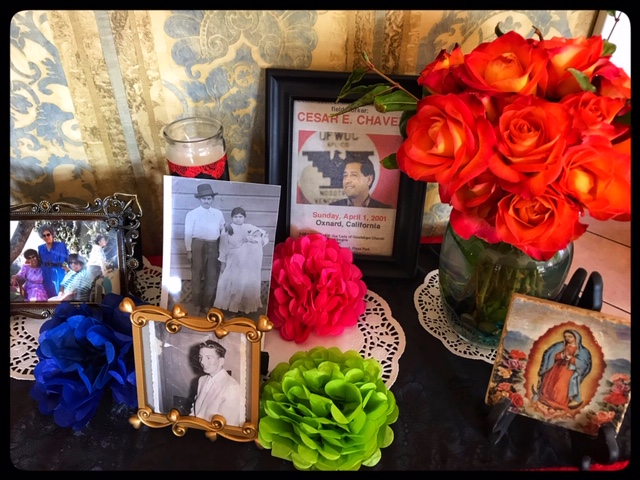
This year my mom made a Day of the Dead altar in the living room. One side of the altar contained the photos of her deceased sisters and brothers, sister-in-law’s, and cousins. The other side, as you can see, has photos of her parents and my dad, and Cesar Chavez, who my mother admired so much.

Ofrenda to parents and husband and Cesar Chavez

My sister’s ofrenda dedicated to the memory of her husband, friends, and our relatives:

A bedroom ofrenda for Dia De Los Muertos


An altar in the library of the high school where my sister works:

An ofrenda in a high school library
http://www.alvaradofrazier.com


Ofrendas and altars are our way of visiting with, remembering and honoring our ancestors and loved ones who’ve departed.

If you are thinking of making your own altar (you still have time) check out these past posts.

The Icons of Day of the Dead.

What’s Up With Mexican Culture and Death?

The Icons of Day of the Dead.

I leave you with these poems from sddayofthedead.org/poems

“In the indigenous, aboriginal perspective on death, both life and death are mere aspects of a common duality or eternal cycle, as denoted in the following Native American poem from North America:

Do not stand at my grave and weep.
I am not there, I do not sleep.
I am a thousand winds that blow.
I am the diamond glints on the snow.
I am the sunlight on the ripened grain.
I am the gentle Autumn’s rain.

When you awaken in the morning hush,
I am the swift uplifting rush
of quiet birds in circled flight.
I am the soft stars that shine at night.
Do not stand at my grave and cry:
I am not there, I did not die.

What is Death?
What is death? It is the glass of life broken into a
thousand pieces, where the soul disperses like
perfume from a flask, into the silence of the eternal night.

Unknown Author

Through the Eyes of the Soul, Day of the Dead in Mexico
Unique Life
Be as happy as you can, oh king Tecayehyatzin
You who appreciates the jewels that flourish!
Will we live again?

Your heart knows this:
We only live once!
Vida única
¡Alégrate en extremo, oh rey Tecayehuatzin,
valuador de joyas florecientes!

¿Acaso una vez más vendremos a vivir?
Tu corazón lo sabe así:
¡Sólo una vez venimos a la vida!

Xayacamachan 1510 A.D.


If you have any questions/comments, please let me know. Thanks!